We Use CookiesWe use cookies to enhance the security, performance, functionality and for analytical and promotional activities. By continuing to browse this site you are agreeing to our privacy policy

10 Best Student Microscopes 2026 in the United States
How do we rank products for you?

Our technology thoroughly searches through the online shopping world, reviewing hundreds of sites. We then process and analyze this information, updating in real-time to bring you the latest top-rated products. This way, you always get the best and most current options available.

headphones-stars

Our Top Picks

#1

Winner

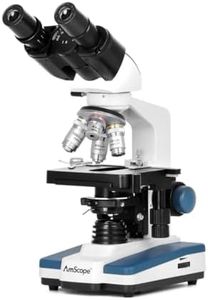
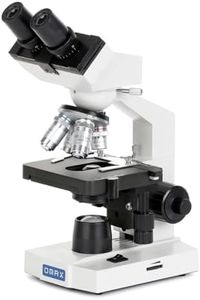
AmScope B120 Series Student & Professional LED Binocular Compound Microscope - 40X-2500X Magnification - Includes 5MP USB Camera & Siedentopf Head

Rating
10.0
Chosen by1,294
Optical Quality
Monocular vs. Binocular
Illumination

Most important from
257 reviews

Optical Quality
The optics deliver clear, bright, and sharp images that surpass even those of many high school microscopes.
Monocular vs. Binocular
The binocular design makes extended viewing comfortable and helps reduce eye strain significantly.
Illumination
The bright, dimmable LED illumination provides even lighting, enhancing visibility of specimens.
Stage and Focus
Precise controls and a mechanical stage allow for easy positioning and focusing of samples.
Magnification
Swappable objectives add versatility, enabling examination of a wide range of specimen sizes.

The AmScope B120 Series is a solid choice for students needing a reliable compound microscope that bridges educational use and professional features. Its magnification range from 40X to 2500X covers most beginner to advanced viewing needs, making it versatile for various specimens. The binocular design is comfortable for extended viewing and helps reduce eye strain compared to monocular models. Optical quality is strong with achromatic lenses and optical glass, offering clear and sharp images suitable for detailed study.

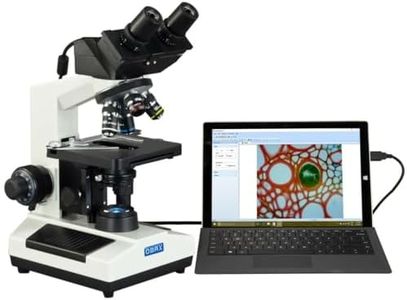
Illumination is a standout feature thanks to bright, daylight-balanced LED light enhanced by a fly-eye lens, which ensures even lighting and good visibility of samples. The included 5MP USB camera and software integration allow easy capturing and analyzing of images on a computer, a useful tool for students documenting their work. The mechanical stage and focus controls are precise, helping users easily position and sharpen their specimens.

The microscope is corded and requires an electric outlet, which could limit portability. While the price is economical for its class, beginners without some basic training might find the settings slightly complex at first. This makes the microscope a well-rounded option for students seeking a serious tool for learning biology, microbiology, or similar fields, along with the added benefit of digital imaging.

Rating
10.0
Chosen by1,294
Optical Quality
Monocular vs. Binocular
Illumination

Most important from
257 reviews

Optical Quality
The optics deliver clear, bright, and sharp images that surpass even those of many high school microscopes.
Monocular vs. Binocular
The binocular design makes extended viewing comfortable and helps reduce eye strain significantly.
Illumination
The bright, dimmable LED illumination provides even lighting, enhancing visibility of specimens.
Stage and Focus
Precise controls and a mechanical stage allow for easy positioning and focusing of samples.
Magnification
Swappable objectives add versatility, enabling examination of a wide range of specimen sizes.
#2

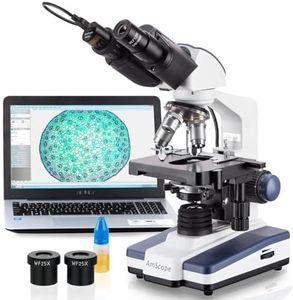
AmScope B120 Series Student & Professional LED Binocular Compound Microscope - 40X-2500X Magnification - Includes 3MP USB Camera & Siedentopf Head

Rating
9.7
Magnification
Optical Quality
Illumination

Most important from
49 reviews

Magnification
Swappable objectives expand the scope’s versatility, enabling detailed views of both microscopic slides and larger objects with the right accessories.
Optical Quality
The optics deliver clear and bright images that outperform even high school microscopes, making it an impressive tool for serious learners.
Illumination
Adjustable lighting is bright yet comfortable, with a dimming dial that allows for easy customization during observation.
Monocular vs. Binocular
The binocular design encourages longer viewing sessions by reducing eye strain, making science exploration enjoyable and engaging.
Stage and Focus
Precise focus and mechanical controls enhance usability, though the knobs are plastic, they still offer excellent performance for the price.

The AmScope B120 is a solid choice for students seeking a reliable and versatile binocular compound microscope. It offers a wide magnification range from 40X to 2500X, covering typical classroom and hobbyist needs, from viewing simple slides to more detailed specimens. The optical quality is enhanced by achromatic objective lenses, providing clearer and sharper images compared to basic models. Bright LED illumination with a special fly-eye lens ensures even, daylight-balanced lighting, which promotes comfortable viewing without eye strain.

The binocular design facilitates easier observation for longer periods, reducing eye fatigue compared to monocular scopes. The included 3MP USB camera allows users to capture and share images, which is useful for projects or remote learning. The mechanical stage and focus controls offer precise adjustments, although the microscope is somewhat bulkier and heavier than simpler models, potentially affecting portability.

Considering its features and price, the AmScope B120 delivers excellent educational value and durability, making it well suited for students, science clubs, and professional beginners who want a dependable microscope with digital integration.

Rating
9.7
Magnification
Optical Quality
Illumination

Most important from
49 reviews

Magnification
Swappable objectives expand the scope’s versatility, enabling detailed views of both microscopic slides and larger objects with the right accessories.
Optical Quality
The optics deliver clear and bright images that outperform even high school microscopes, making it an impressive tool for serious learners.
Illumination
Adjustable lighting is bright yet comfortable, with a dimming dial that allows for easy customization during observation.
Monocular vs. Binocular
The binocular design encourages longer viewing sessions by reducing eye strain, making science exploration enjoyable and engaging.
Stage and Focus
Precise focus and mechanical controls enhance usability, though the knobs are plastic, they still offer excellent performance for the price.
#3

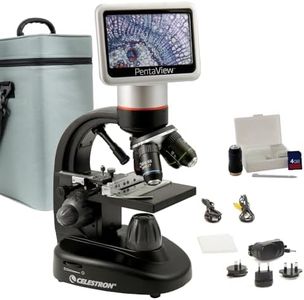
AmScope B120 Series Student & Professional LED Binocular Compound Microscope - 40X-2500X Magnification - Includes 1MP USB Camera & Siedentopf Head

Rating
9.1
Optical Quality
Illumination
Monocular vs. Binocular

Most important from
803 reviews

Optical Quality
The microscope features solid construction and smooth mechanical operation, delivering clear and sharp optics essential for detailed observation.
Illumination
The LED illumination provides sufficient, even lighting that reduces eye strain and enhances viewing comfort during extended use.
Monocular vs. Binocular
The binocular design significantly improves comfort and reduces eye fatigue compared to monocular models, making it ideal for longer study sessions.
Magnification
The microscope supports high magnification up to 2500X with oil immersion, enabling detailed views that satisfy both beginners and more experienced users.
Stage and Focus
The stage and focusing controls are standard and may require some practice for younger users to master smooth handling.

The AmScope B120 Series is a solid choice for students and those new to microscopy who want a binocular compound microscope. Its wide magnification range from 40X up to 2500X covers most beginner to intermediate needs, allowing detailed views of slides from simple cells to more complex specimens. The achromatic objective lenses help deliver clear and sharp images, which is important for learning and detailed observation. Illumination is handled by a bright LED light with a special fly-eye lens design, giving even, daylight-balanced lighting that makes it easier to see details without eye strain.

Being binocular, it offers more comfortable viewing compared to monocular microscopes, reducing eye fatigue during longer use. Another notable feature is the included 1.0 MP USB camera, which lets students capture and review images on a computer—great for reports and sharing findings. The microscope’s metal and plastic build feels sturdy enough for classroom or home use, and the Siedentopf head allows smooth focus adjustments.

On the downside, the 1.0 MP camera is basic and might not provide very high-resolution images for advanced digital work. Also, the unit is corded electric, which means it needs to be near a power outlet, reducing portability if you want to use it outside a fixed spot. The stage and focusing controls are standard but may take a little practice for younger students to handle smoothly. The AmScope B120 offers excellent value with strong optical performance and useful digital features, making it well-suited for students and educational labs looking for a reliable, affordable microscope that grows with your learning.

Rating
9.1
Optical Quality
Illumination
Monocular vs. Binocular

Most important from
803 reviews

Optical Quality
The microscope features solid construction and smooth mechanical operation, delivering clear and sharp optics essential for detailed observation.
Illumination
The LED illumination provides sufficient, even lighting that reduces eye strain and enhances viewing comfort during extended use.
Monocular vs. Binocular
The binocular design significantly improves comfort and reduces eye fatigue compared to monocular models, making it ideal for longer study sessions.
Magnification
The microscope supports high magnification up to 2500X with oil immersion, enabling detailed views that satisfy both beginners and more experienced users.
Stage and Focus
The stage and focusing controls are standard and may require some practice for younger users to master smooth handling.

Buying Guide for the Best Student Microscopes

Choosing the right student microscope can be a crucial step in fostering a love for science and discovery. When selecting a microscope, it's important to consider the specific needs and level of the student, as well as the type of observations they will be making. Here are some key specifications to consider and how to navigate them to find the best fit for your needs.
MagnificationMagnification refers to how much larger the microscope can make an object appear. This is important because it determines the level of detail that can be observed. Microscopes typically offer a range of magnifications, such as 40x, 100x, 400x, and 1000x. For younger students or beginners, lower magnifications (40x to 400x) are usually sufficient to view basic cell structures and small organisms. More advanced students may require higher magnifications (up to 1000x) to see finer details. Consider the student's level and the type of specimens they will be studying when choosing the appropriate magnification range.
Optical QualityOptical quality refers to the clarity and sharpness of the image produced by the microscope. This is crucial for accurate observations and learning. High-quality optics, such as those made from glass rather than plastic, provide clearer and more detailed images. For students, especially those in higher education, investing in a microscope with good optical quality can enhance their learning experience. Look for microscopes with achromatic or plan objectives, which correct for color and focus distortions, providing a clearer view.
IlluminationIllumination is the light source used to illuminate the specimen being observed. Proper lighting is essential for seeing details clearly. There are two main types of illumination: LED and halogen. LED lights are energy-efficient, long-lasting, and provide bright, even lighting, making them ideal for most student microscopes. Halogen lights are brighter but can get hot and consume more power. For most students, an LED-illuminated microscope is a practical and effective choice. Ensure the microscope has adjustable brightness to accommodate different types of specimens and lighting conditions.
Monocular vs. BinocularMonocular microscopes have a single eyepiece, while binocular microscopes have two. Monocular microscopes are generally more affordable and lighter, making them suitable for younger students or those who need a portable option. Binocular microscopes, on the other hand, provide a more comfortable viewing experience, especially for extended use, as they reduce eye strain. They are often preferred by older students or those engaged in more detailed and prolonged observations. Consider the student's comfort and the duration of use when deciding between monocular and binocular microscopes.
Stage and FocusThe stage is the platform where the specimen slide is placed, and focus refers to the mechanism used to bring the specimen into clear view. A mechanical stage, which allows precise movement of the slide, is beneficial for detailed study and ease of use. Coarse and fine focus knobs are essential for adjusting the clarity of the image. Coarse focus is used for general focusing, while fine focus is used for making small adjustments to achieve a sharp image. For students, especially those in higher education, a microscope with a mechanical stage and both coarse and fine focus knobs can greatly enhance the learning experience by providing better control and precision.

FAQ

Most Popular Categories Right Now