We Use CookiesWe use cookies to enhance the security, performance, functionality and for analytical and promotional activities. By continuing to browse this site you are agreeing to our privacy policy

10 Best Sony Camera Lenses 2026 in the United States
How do we rank products for you?

Our technology thoroughly searches through the online shopping world, reviewing hundreds of sites. We then process and analyze this information, updating in real-time to bring you the latest top-rated products. This way, you always get the best and most current options available.

headphones-stars

Our Top Picks

#1

Winner

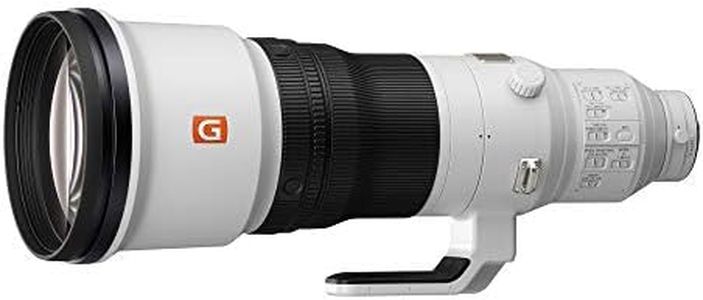
FE 600mm F4 GM Super Telephoto Lens (SEL600F40GM)

Rating
10.0
Chosen by1,431
Focal Length
Aperture
Lens Elements and Coatings

Most important from
5 reviews

Focal Length
Compared to zoom alternatives, this prime lens resolves finer details on high-megapixel cameras and results in a higher keeper rate.
Aperture
Its wide F4 aperture shines in low-light conditions like early mornings and late evenings, capturing shots that would otherwise be missed.
Lens Elements and Coatings
This lens delivers exceptional sharpness from edge to edge, making details truly pop with stunning background separation.
Size and Weight
The surprisingly lightweight design allows for handheld use, offering greater freedom of movement during shoots.
Weather Sealing
The lens significantly expands shooting opportunities even in challenging weather, turning cloudy or rainy days into productive sessions.

The Sony FE 600mm F4 GM is a top-tier super-telephoto lens designed for Sony full-frame mirrorless cameras with an E-mount. Its standout feature is the incredibly long 600mm focal length paired with a wide F4 aperture, which lets you capture distant subjects with great detail and excellent background blur. This lens is surprisingly lightweight for its class, making it easier to handle during long shoots without the usual front-heavy feel common in big telephoto lenses.

The advanced Extreme Aspherical (XA) element helps reduce distortion and keep images sharp, while the fast and quiet autofocus system powered by two Extreme Dynamic linear motors ensures you don’t miss fleeting moments, even when shooting fast-moving subjects. It supports high-speed continuous shooting up to 20 frames per second, which is great for sports or wildlife photography. The lens offers robust build quality with weather sealing, so you can take it out in challenging weather without worry.

At 6.7 pounds, it is light for a 600mm lens but still quite heavy compared to typical lenses, so a tripod or monopod is recommended for extended use. This lens is ideal for serious wildlife and sports photographers who need extreme reach and exceptional image quality, but casual users may find it bulky and pricey for occasional use.

Rating
10.0
Chosen by1,431
Focal Length
Aperture
Lens Elements and Coatings

Most important from
5 reviews

Focal Length
Compared to zoom alternatives, this prime lens resolves finer details on high-megapixel cameras and results in a higher keeper rate.
Aperture
Its wide F4 aperture shines in low-light conditions like early mornings and late evenings, capturing shots that would otherwise be missed.
Lens Elements and Coatings
This lens delivers exceptional sharpness from edge to edge, making details truly pop with stunning background separation.
Size and Weight
The surprisingly lightweight design allows for handheld use, offering greater freedom of movement during shoots.
Weather Sealing
The lens significantly expands shooting opportunities even in challenging weather, turning cloudy or rainy days into productive sessions.
#2

Sony FE 50-150 F2 GM

The Sony FE 50-150mm F2 GM is a standout telephoto zoom lens designed for Sony full-frame cameras with FE and E mounts. Its key highlight is the constant F2 aperture throughout the zoom range, which is rare for telephoto zooms and allows excellent low-light performance and beautiful background blur (bokeh) to make your subjects pop. The lens offers superb sharpness and image quality from 50mm to 150mm, ideal for portraits, weddings, and events where you want both reach and fast aperture.

Autofocus is fast and precise, suitable for both still photography and video, which adds versatility if you’re into filmmaking. The internal zoom design helps keep the lens size manageable, though it is a bit on the heavier side at nearly 3 pounds, which might be noticeable during long shoots. This lens is a premium choice for enthusiasts and professionals looking for a high-quality telephoto zoom with wide aperture, but its weight and possible absence of stabilization or weather sealing could be factors depending on your shooting style and conditions.

#3

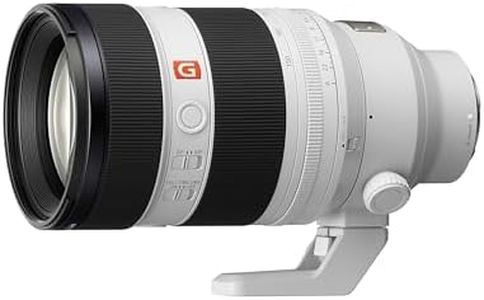
Sony FE 100-400mm F4.5–5.6 GM OSS White

Rating
8.2
Autofocus
Image Stabilization
Size and Weight

Most important from
235 reviews

Autofocus
Exceptional autofocus, image clarity, and stabilization make this lens indispensable for professional and action photography.
Image Stabilization
Exceptional autofocus, image clarity, and stabilization make this lens indispensable for professional and action photography.
Size and Weight
The lens balances portability and performance, weighing about 3 pounds, which is manageable for extended handheld use.
Weather Sealing
Build quality and weather sealing provide reliability in challenging outdoor conditions without excessive bulk.

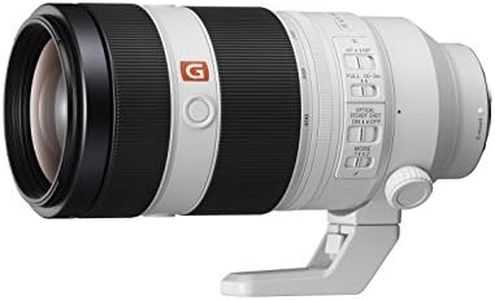
The Sony FE 100-400mm F4.5-5.6 GM OSS is a telephoto zoom lens designed for Sony full-frame cameras, offering a versatile focal range from 100mm to 400mm. This range is great for wildlife, sports, and outdoor photography where you need to zoom in on distant subjects. The variable aperture of f/4.5 to f/5.6 means it’s not the fastest lens in low light, but it balances size and weight well, making it more portable than some heavier telephoto lenses. Weighing about 3 pounds, it’s relatively manageable for extended handheld shooting.

Its optical image stabilization (Optical SteadyShot) helps reduce blur from camera shake, especially useful at longer focal lengths. Autofocus is fast, quiet, and precise thanks to the dual linear and Direct Drive SSM motors, which is handy when tracking moving subjects. The lens uses a 9-blade circular aperture to create smooth, attractive background blur (bokeh), enhancing subject separation. The minimum focus distance is around 3.2 feet, allowing for decent close-up shots with a maximum magnification of 0.35x.

It also features Sony’s G Master design, known for sharpness and build quality, and includes weather sealing, so it can handle some challenging outdoor conditions. One downside is that the lens is relatively large and might feel bulky for casual use, and the aperture doesn’t stay constant across the zoom range which could limit performance in dim light. This lens suits enthusiasts and professionals who need a flexible telephoto zoom with excellent image quality and reliable stabilization, especially for nature and action photography.

Rating
8.2
Autofocus
Image Stabilization
Size and Weight

Most important from
235 reviews

Autofocus
Exceptional autofocus, image clarity, and stabilization make this lens indispensable for professional and action photography.
Image Stabilization
Exceptional autofocus, image clarity, and stabilization make this lens indispensable for professional and action photography.
Size and Weight
The lens balances portability and performance, weighing about 3 pounds, which is manageable for extended handheld use.
Weather Sealing
Build quality and weather sealing provide reliability in challenging outdoor conditions without excessive bulk.

Buying Guide for the Best Sony Camera Lenses

Choosing the right Sony camera lens can significantly enhance your photography experience. The right lens can help you capture stunning images, whether you're shooting landscapes, portraits, or action shots. To make an informed decision, it's important to understand the key specifications of camera lenses and how they align with your photography needs. Here are some essential specs to consider when selecting a Sony camera lens.
Focal LengthFocal length determines the field of view and magnification of the lens. It is measured in millimeters (mm). A shorter focal length (e.g., 16-35mm) offers a wider field of view, ideal for landscapes and architecture. A medium focal length (e.g., 50mm) is great for portraits and everyday photography. Longer focal lengths (e.g., 70-200mm) provide greater magnification, perfect for wildlife and sports photography. Choose a focal length based on the type of photography you plan to do most often.
ApertureAperture refers to the size of the lens opening that allows light to enter the camera. It is expressed as an f-number (e.g., f/1.8, f/4). A lower f-number means a larger aperture, which allows more light and is beneficial for low-light conditions and achieving a shallow depth of field (blurry background). Higher f-numbers mean smaller apertures, suitable for well-lit conditions and greater depth of field. If you often shoot in low light or want to create a bokeh effect, opt for a lens with a larger aperture (lower f-number).
Image StabilizationImage stabilization helps reduce blur caused by camera shake, especially in low-light conditions or when using longer focal lengths. Some lenses come with built-in stabilization, which can be very useful for handheld shooting. If you frequently shoot in situations where a tripod isn't practical, or if you use telephoto lenses, consider a lens with image stabilization to ensure sharper images.
Lens MountThe lens mount is the interface between the camera body and the lens. Sony cameras typically use the E-mount or A-mount. Ensure that the lens you choose is compatible with your camera's mount. E-mount lenses are designed for Sony's mirrorless cameras, while A-mount lenses are for their DSLR and SLT cameras. Verify your camera's mount type and select a lens that matches it.
AutofocusAutofocus (AF) capability is crucial for capturing sharp images quickly and accurately. Some lenses have faster and quieter autofocus motors, which are beneficial for both photography and videography. If you shoot fast-moving subjects, such as in sports or wildlife photography, look for lenses with advanced autofocus systems. For general use, a standard autofocus system should suffice.
Lens Elements and CoatingsLens elements and coatings affect image quality by reducing aberrations, flare, and ghosting. High-quality lenses often feature special elements like aspherical or extra-low dispersion (ED) glass, and coatings like Nano AR or fluorine. These enhancements improve sharpness, contrast, and color accuracy. If image quality is a top priority, especially for professional work, consider lenses with advanced elements and coatings.
Size and WeightThe size and weight of a lens can impact your shooting experience, especially if you plan to carry your camera for extended periods. Larger, heavier lenses may offer better performance but can be cumbersome. Smaller, lighter lenses are more portable and convenient for travel and street photography. Consider your comfort and shooting style when choosing the size and weight of your lens.
Weather SealingWeather sealing protects the lens from dust, moisture, and harsh weather conditions. This feature is important if you often shoot outdoors or in challenging environments. Lenses with weather sealing are more durable and reliable in adverse conditions. If you frequently shoot in unpredictable weather, investing in a weather-sealed lens can be beneficial.

FAQ

Most Popular Categories Right Now