We Use CookiesWe use cookies to enhance the security, performance, functionality and for analytical and promotional activities. By continuing to browse this site you are agreeing to our privacy policy

10 Best Serger Machines 2026 in the United States
How do we rank products for you?

Our technology thoroughly searches through the online shopping world, reviewing hundreds of sites. We then process and analyze this information, updating in real-time to bring you the latest top-rated products. This way, you always get the best and most current options available.

headphones-stars

Our Top Picks

#1

Winner

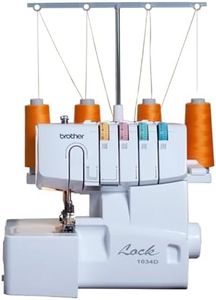
Brother 1034D Serger Overlock Sewing Machine

Rating
10.0
Chosen by1,286
Ease of Threading
Adjustable Tension
Stitch Options

Most important from
12156 reviews

Ease of Threading
Threading is straightforward and quick thanks to color-coded guides and helpful instructional videos, enabling setup in just minutes.
Adjustable Tension
Adjusting tension is simple with a clear troubleshooting chart, ensuring even stitches across various thread configurations.
Stitch Options
It covers essential stitch types like 3/4-thread overlock, rolled hem, flatlock, and blind hem, though it does not perform coverlock or chain stitches.
Differential Feed
Differential feed works well for handling different fabric thicknesses and aligning patterns like stripes.

The Brother 1034D serger machine is a strong choice for those who want a reliable overlock machine that can handle both everyday fabrics and heavier materials like denim. It supports 3 or 4 thread stitching, which is perfect for most common serging jobs, offering versatility with stitch options. With a fast stitching speed of up to 1,300 stitches per minute, it allows you to work quickly and efficiently. One of its standout features is the easy threading system, thanks to color-coded guides and a lower looper threader, which helps reduce the usual frustration of setting up a serger. The metal frame gives it durability and steadiness during use.

The machine includes useful accessories like three snap-on feet (standard, gathering, and blind stitch) and a removable trim trap that keeps your workspace cleaner. It lacks a free arm feature, which could limit sewing smaller cylindrical items like cuffs or sleeves. The Brother 1034D is well suited for hobbyists or home sewers looking for a heavy-duty serger that’s easy to use and capable of handling various fabrics, though those needing very advanced features might find it somewhat basic.

Rating
10.0
Chosen by1,286
Ease of Threading
Adjustable Tension
Stitch Options

Most important from
12156 reviews

Ease of Threading
Threading is straightforward and quick thanks to color-coded guides and helpful instructional videos, enabling setup in just minutes.
Adjustable Tension
Adjusting tension is simple with a clear troubleshooting chart, ensuring even stitches across various thread configurations.
Stitch Options
It covers essential stitch types like 3/4-thread overlock, rolled hem, flatlock, and blind hem, though it does not perform coverlock or chain stitches.
Differential Feed
Differential feed works well for handling different fabric thicknesses and aligning patterns like stripes.
#2

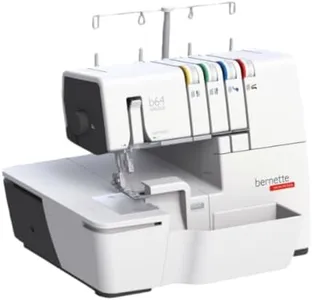
Bernette B64 Airlock Serger Overlocker with Air Threading | 1300SPM, 16 Stitches, Free Arm, LED Light, Free Hand System | 6 Overlock Foot Kit Extension Table

Rating
8.8
Ease of Threading
Free Arm Capability

Most important from
8 reviews

Ease of Threading
The air threading system works smoothly and is intuitive to set up, simplifying what is usually a tricky process.
Free Arm Capability
The machine comes with practical accessories like a side table, free arm, and adapters for smaller spools, enhancing versatility.

The Bernette B64 Airlock serger is a versatile machine suitable for both beginners and experienced users seeking a reliable, feature-rich overlocker. It offers 16 stitch options and supports up to 4 threads, covering common serging needs such as edging, hemming, and decorative stitching. A notable feature is its air threading system, which simplifies the usually challenging process of threading loops, making it quicker and easier, especially for users new to sergers.

With a fast sewing speed of 1300 stitches per minute and a built-in LED light, the machine provides efficiency and good visibility while working. The Free Hand System allows raising the presser foot hands-free, offering better control over fabric movement—particularly useful for quilting or delicate projects. It includes an extension table and a 6-piece overlock foot kit that enhance its capability for tasks like gathering and piping. Adjustable tension and differential feed settings enable customization for various fabric types and help prevent puckering or stretching. Additionally, a built-in rolled hem feature is available for neatly finishing lightweight fabrics.

One consideration is that the machine weighs around 21 pounds, which may reduce portability compared to lighter models despite its 'portable design' label. It lacks advanced digital interfaces such as LCD screens, which might be missed by users preferring high-tech controls; however, this also results in straightforward operation without complex menus. The Bernette B64 Airlock is a solid choice for home sewists seeking a dependable serger with practical features like air threading and multiple stitch options, effectively balancing ease of use with professional capabilities.

Rating
8.8
Ease of Threading
Free Arm Capability

Most important from
8 reviews

Ease of Threading
The air threading system works smoothly and is intuitive to set up, simplifying what is usually a tricky process.
Free Arm Capability
The machine comes with practical accessories like a side table, free arm, and adapters for smaller spools, enhancing versatility.
#3

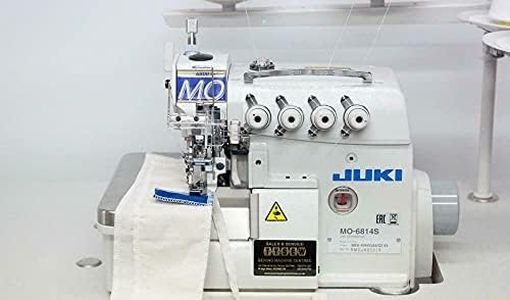
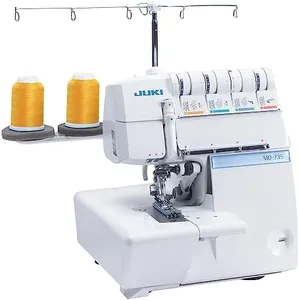
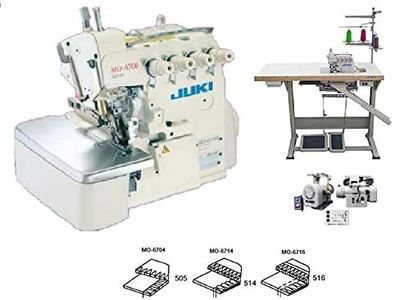
JUKI MO-6814s Series Serger 4 Thread Sewing Machine,Table & Servo Motor Assembled and Light (FOUR THREAD two needle)

Rating
7.6
Stitch Options

Most important from
2 reviews

Stitch Options
The fast sewing speed and versatile stitch options make it suitable for efficient garment finishing and overlocking tasks.

The JUKI MO-6814s is a solid 4-thread, 2-needle serger that suits users looking for reliable multi-thread stitching, especially for garment finishing and overlocking. It offers a good range of stitch options with a U.S. standard 514 stitch style, making it versatile for most common serging tasks. The maximum sewing speed is quite fast at 7,000rpm, allowing efficient work once you get comfortable with the machine. Differential feed comes with micro-adjustment, which helps control fabric stretching or gathering—important for working with knits or delicate fabrics. Thread tension can be regulated by push-button, which is simpler than some manual dial systems, but threading this model might still require some patience due to typical serger complexity.

It includes a built-in micro-lifter to help manage the presser foot, which lifts up to 7mm, supporting thicker fabric layers. The machine is quite heavy (28kg), indicating solid metal construction for durability but less portability. It comes pre-assembled with a servo motor and power stand, so you mostly need to set it up and thread it before sewing, making it more convenient than models needing full assembly. While it lacks free arm capability, this model is aimed more at flat fabric work than sleeve or pant leg finishing.

This model is great for those who want a dependable and fast serger for general sewing and overlocking, especially in a home or small workshop setting, but beginners should be ready for a learning curve with threading and tension adjustments.

Rating
7.6
Stitch Options

Most important from
2 reviews

Stitch Options
The fast sewing speed and versatile stitch options make it suitable for efficient garment finishing and overlocking tasks.

Buying Guide for the Best Serger Machines

Choosing the right serger machine can significantly enhance your sewing projects by providing professional finishes and efficient stitching. A serger, also known as an overlock machine, is designed to sew over the edge of one or two pieces of fabric for hemming, seaming, or edging. To find the best serger for your needs, it's important to understand the key specifications and how they align with your sewing projects. Here are the essential specs to consider when selecting a serger machine.
Number of ThreadsThe number of threads a serger can use is crucial because it determines the types of stitches the machine can create. Sergers typically range from 2-thread to 5-thread models. A 2-thread serger is suitable for lightweight fabrics and basic overlocking. A 3-thread serger is great for general-purpose sewing and provides a strong seam. A 4-thread serger offers added durability and is ideal for knit fabrics. A 5-thread serger combines overlocking and chain stitching, making it perfect for heavy-duty projects and professional finishes. Choose the number of threads based on the complexity and type of your sewing projects.
Stitch OptionsStitch options refer to the variety of stitches a serger can perform, such as overlock, rolled hem, flatlock, and coverstitch. More stitch options provide greater versatility for different sewing techniques and fabric types. Basic models may offer fewer stitch options, which are sufficient for simple projects. Advanced models with a wide range of stitch options are better for experienced sewers who work on diverse projects. Consider the types of stitches you need for your projects and choose a serger that offers those specific options.
Differential FeedDifferential feed is a feature that allows you to adjust the speed at which the fabric is fed through the machine. This is important for preventing stretching or puckering of fabrics, especially when working with knits or lightweight materials. A differential feed ratio typically ranges from 0.5 to 2.0. A lower ratio is used for gathering fabric, while a higher ratio is used for stretching. If you frequently work with a variety of fabric types, a serger with adjustable differential feed will provide better control and more professional results.
Ease of ThreadingThreading a serger can be complex due to the multiple threads and intricate threading paths. Some sergers come with features like color-coded threading guides, automatic threading, or lay-in threading systems to simplify the process. If you are a beginner or prefer convenience, look for a serger with easy threading features. Experienced sewers may be comfortable with manual threading, but even they can benefit from features that reduce threading time and frustration.
Adjustable TensionTension control is essential for achieving balanced stitches and preventing thread breakage. Adjustable tension allows you to fine-tune the tightness of the threads to match different fabric types and stitch styles. Some sergers have manual tension dials, while others offer automatic tension settings. Beginners may find automatic tension easier to use, while experienced sewers might prefer manual adjustments for greater control. Consider your comfort level with tension adjustments and the types of fabrics you plan to sew.
Free Arm CapabilityA free arm is a removable part of the sewing surface that allows you to sew small, tubular items like sleeves, cuffs, and hems more easily. This feature is particularly useful for garment construction and detailed work. If you frequently sew clothing or small items, a serger with a free arm will provide greater flexibility and ease of use. For those who primarily work on flat fabrics, this feature may be less critical.
Built-in Rolled HemA built-in rolled hem feature allows you to create narrow, professional hems quickly and easily. This is particularly useful for finishing edges on lightweight fabrics like chiffon or silk. Some sergers require manual adjustments to switch to a rolled hem, while others have a built-in setting that simplifies the process. If you often work with delicate fabrics or need to create fine hems, look for a serger with an easy-to-use rolled hem feature.

FAQ

Most Popular Categories Right Now