10 Best Night Scopes 2026 in the United States

Related Products
Up to 8% off
Recommended lists


Our technology thoroughly searches through the online shopping world, reviewing hundreds of sites. We then process and analyze this information, updating in real-time to bring you the latest top-rated products. This way, you always get the best and most current options available.

Our Top Picks
Winner
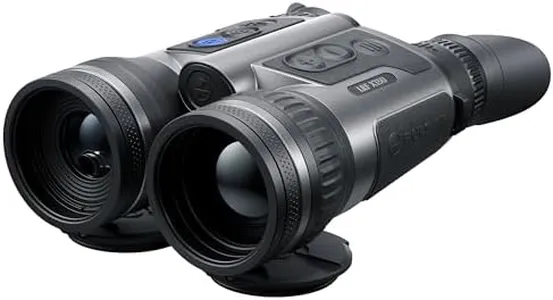
Pulsar Merger LRF XT50 Thermal Binoculars with Laser Rangefinder
Most important from
6 reviews
The Pulsar Merger LRF XT50 is a premium thermal binocular designed for night vision enthusiasts who need sharp, detailed images at long distances. It uses a high-resolution 1280x1024 thermal sensor with a 12-micron pixel size, which means the image quality is very clear and detailed compared to many other night scopes. With a magnification range of 2x to 16x, it offers versatile zoom options, allowing you to easily scan wide areas or zoom in on specific targets without losing image quality due to its advanced stabilization. The field of view is 17.5 degrees, giving you a good balance between seeing a broad area and focusing on details. The built-in laser range finder can accurately measure distances up to 1,640 yards, which is especially useful for hunters or outdoor observers who need precise range data.
Thermal imaging means it detects heat rather than relying on visible light, so it works well even in complete darkness or through light fog and smoke. It also has an infrared illuminator for enhanced night performance, though thermal sensors don’t require strong IR light like traditional night vision. Other highlights include the ability to record photos and videos directly to built-in memory, and Wi-Fi connectivity to link with your smartphone for remote control and live viewing via the Stream Vision 2 app. The device is waterproof and built with a sturdy magnesium enclosure, making it durable for outdoor use.
On the downside, the manual focus might take some getting used to if you prefer automatic options, and at 2.1 pounds, it’s somewhat heavy for handheld use over long periods. Its high price and export restrictions might also limit availability. This model suits serious hunters, law enforcement, or professional users who want top-tier thermal imaging, long-range detection, and advanced features in one package.
Most important from
6 reviews
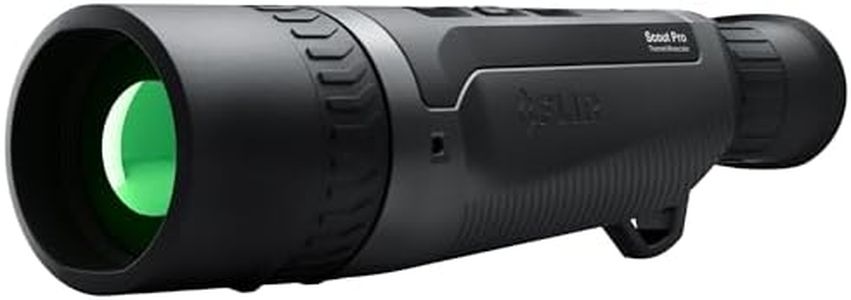
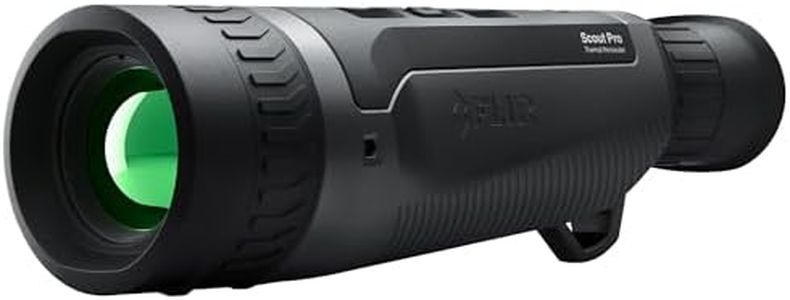
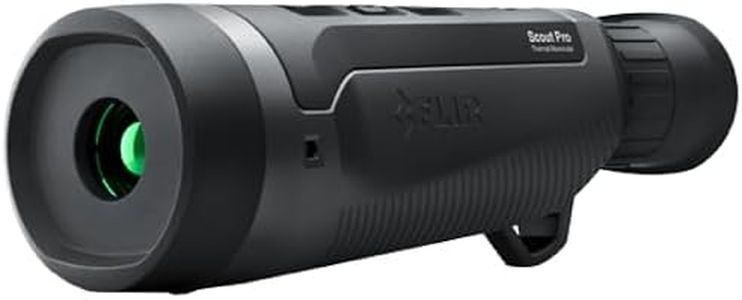
FLIR Scout Pro III - Thermal Imaging Monocular with a Human Detection Range up to 1500m (12° Wide FOV Lens), for Law Enforcement Professionals
The FLIR Scout Pro III is a thermal imaging monocular designed primarily for law enforcement and professionals who need to detect human presence from a long distance. It can spot a person up to 1500 meters away, which is excellent for night-time surveillance or tactical operations. Its 12° wide field of view lens helps you see a broader area without moving the device much, and the zoom option (1x to 8x) lets you get closer to details when needed. The device uses thermal imaging, meaning it creates images based on heat rather than visible light, so it works well in total darkness without any extra lighting.
One of its strong points is how easy it is to use, with an intuitive interface that even those with little training can quickly operate. It also supports sharing images and videos through a phone or USB, and can stream live footage—helpful if a team needs to see what one person is observing. The Scout Pro III is compact and comfortable to hold for long periods, making it practical for fieldwork. It comes with useful extras like a car charger and a docking station.
For those seeking reliable, long-range human detection in total darkness combined with simple operation and good sharing features, the FLIR Scout Pro III is a solid choice. It is best suited for professionals who prioritize safety and situational awareness over extremely detailed image resolution or very wide scanning angles.
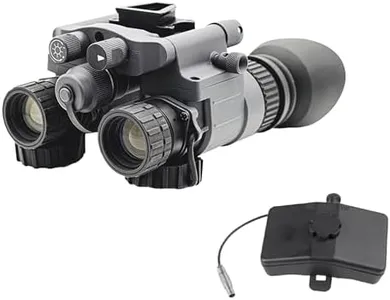
Armasight BNVD-51 Gen 3 Pinnacle Night Vision Goggle 1600+ Battery Pack
Most important from
4 reviews
The Armasight BNVD-51 Gen 3 Pinnacle Night Vision Goggle is a high-end device designed for serious users like military and law enforcement professionals. One of its standout features is the Ghost White Phosphor Image Intensifier Tubes, which are favored by elite special operators for their clarity. It also comes with a built-in infrared illuminator, allowing you to navigate and read in complete darkness. This makes the BNVD-51 very effective for low-light conditions and total darkness scenarios.
The goggle offers a wide 51-degree field of view, which is beneficial for maintaining situational awareness. Additionally, its tough, compact, and weather-resistant housing ensures durability in various environments. The manual gain control feature lets you adjust the brightness to your liking, while the automatic protective system prevents damage to the intensifier tubes in changing light conditions.
One of its unique perks is the ability to mount it on a helmet, and it can be adjusted for use as a monocular, preserving night vision in one eye if needed. Weighing 1.4 pounds, it is relatively lightweight but may still feel heavy during prolonged use. The goggles come with a battery pack, but only one CR123A battery is included, which could be a downside if you need extended usage. The BNVD-51 is a robust and versatile night vision goggle, but its premium features and design are likely best suited for professional rather than casual use.
Most important from
4 reviews
Buying Guide for the Best Night Scopes
Choosing the right night scope can significantly enhance your nighttime activities, whether it's for hunting, wildlife observation, or security purposes. The key to finding the best night scope for you is understanding the various specifications and how they align with your specific needs. Here are the main specs to consider when selecting a night scope and how to navigate them.FAQ
Most Popular Categories Right Now


