10 Best Engine Hoist 2026 in the United States


Related Products
Up to 10% off
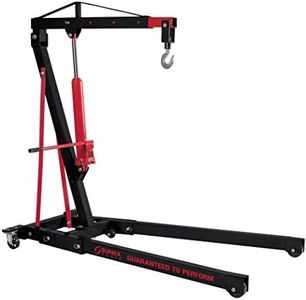
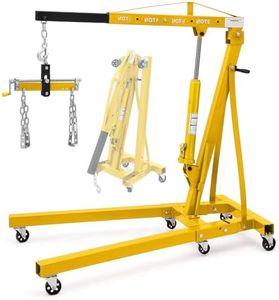
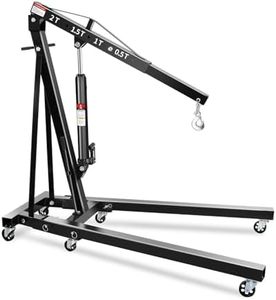
Our technology thoroughly searches through the online shopping world, reviewing hundreds of sites. We then process and analyze this information, updating in real-time to bring you the latest top-rated products. This way, you always get the best and most current options available.

Our Top Picks
Winner
OTC 1585A 1,250 lb. Power Train Lift with Tilting Plate - Ideal for Engine/Transaxle Service
Most important from
16 reviews
The OTC 1585A powertrain lift is an excellent choice for lifting engines, transaxles, and similar heavy vehicle parts. It supports up to 1,250 pounds, covering a wide range of car engines and powertrain components. The lift range from about 29.5 to 68.5 inches provides sufficient height flexibility for most repair and installation tasks. Constructed from strong metal, it ensures durability and long-lasting use.
Its hydraulic system operates using shop air, which makes lifting easier and less strenuous compared to manual hoists; however, an air compressor is required for operation. The compact design combined with 4-inch swivel casters allows for relatively easy movement around a workshop, although the lift weighs 305 pounds. The tilting plate is a valuable feature, enabling adjustments up to 17 degrees side to side and 22 degrees front to back, helping to keep the engine steady during lifting and enhancing safety and alignment.
This model does not fold for storage, which could be a consideration for those with limited workshop space. It is mainly designed for cars and may not be suitable for larger vehicles or heavy-duty engines. The product has a 4.3-star user rating, indicating reliable performance, and it comes with a limited lifetime warranty. The OTC 1585A serves well as a workshop engine hoist for typical car maintenance, especially when precise control and tilting capability are needed along with access to an air supply.
Most important from
16 reviews
Vestil AHA-2-10-10 Aluminum Adjustable Height Gantry Crane with Glass Filled Nylon Casters 10 Ft. Wide x 10 Ft. Max Usable Height 2,000 Lb. Capacity Silver
The Vestil AHA-2-10-10 is a gantry crane designed for lifting heavy items up to 2,000 pounds, making it suitable for many engine hoisting tasks. It features a strong yet lightweight aluminum frame, which resists rust and offers easier mobility compared to steel models. The crane's height is adjustable up to 10 feet, giving you flexibility in lifting different-sized engines or components.
Moving it around is simpler thanks to its four swivel glass-filled nylon casters that include locks to keep it securely in place when needed. However, this model is a manual gantry crane, so it doesn't have hydraulic lifting, meaning you’ll need an external forklift or overhead device to adjust the height—it’s not self-powered for lifting. The crane isn’t foldable, so it requires a decent amount of space for storage.
Weighing 204 pounds, it’s reasonably portable but may need two people to move safely. If you want a durable, adjustable-height gantry for engine work and have access to a forklift or similar equipment for height adjustment, this Vestil crane is a solid choice. Just keep in mind that it won’t do the lifting by itself and isn’t the most compact option if storage space is limited.
Garvee 2 Ton Engine Hoist with Lever, Hydraulic Cherry Picker Engine Crane, Heavy Duty Folding Shop Crane with 6 Casters, Engine Lift for Garage, Workshop, Blue
The Garvee 2 Ton Engine Hoist is a solid choice for anyone needing to lift heavy engines or similar items up to 4400 lbs (2 tons). Made from sturdy high-strength steel and powered by an 8-ton hydraulic pump, it offers reliable and strong lifting power. The hoist’s adjustable lift settings (ranging from 1/2 ton up to 2 tons) make it suitable for various engine sizes, giving you good flexibility. Its folding design and retractable outriggers help save space when stored, which is great if you have a smaller garage or workshop. With six casters, it’s fairly easy to move around despite weighing over 140 pounds. One notable feature is the 2-in-1 design that combines an engine crane with a leveling tool, potentially reducing the number of separate tools you need.
The hydraulic lifting makes raising heavy objects much easier compared to manual hoists, though it’s important to keep the hydraulic system well maintained. Some users might find assembling or adjusting it a little challenging, and since it’s relatively heavy, it’s best suited for stationary use or occasional moves rather than frequent transport. This hoist serves as a practical and versatile option for home mechanics, garages, or small shops that require dependable engine lifting without investing in overly complex or oversized equipment.
Buying Guide for the Best Engine Hoist
Choosing the right engine hoist is crucial for safely and efficiently lifting and moving heavy engines. The right hoist will depend on the weight of the engines you plan to lift, the space you have available, and how often you will use the hoist. Understanding the key specifications will help you make an informed decision and ensure that the hoist meets your needs.FAQ
Most Popular Categories Right Now


