We Use CookiesWe use cookies to enhance the security, performance, functionality and for analytical and promotional activities. By continuing to browse this site you are agreeing to our privacy policy

10 Best Beginner Cameras 2026 in the United States
How do we rank products for you?

Our technology thoroughly searches through the online shopping world, reviewing hundreds of sites. We then process and analyze this information, updating in real-time to bring you the latest top-rated products. This way, you always get the best and most current options available.

headphones-stars

Our Top Picks

#1

Winner

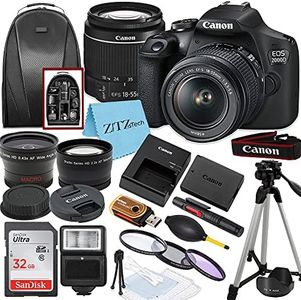
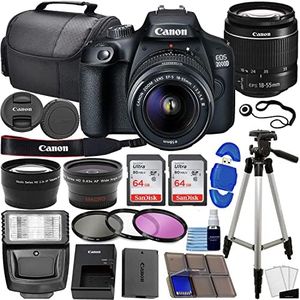
Canon EOS 2000D / Rebel T7 DSLR Camera with EF-S 18-55mm Lens + SanDisk 32GB Card Tripod Case Wideangle Lenses ZeeTech Accessory Bundle (20pc Bundle) (18-55MM, Card) Black (Renewed)

Rating
10.0
Chosen by1,126
Ease of Use
Sensor Size

Most important from
407 reviews

Ease of Use
This setup offers excellent value, combining Canon’s trusted quality with a comprehensive kit that’s perfect for beginners.
Sensor Size
The camera delivers amazing picture quality that impresses right out of the box.

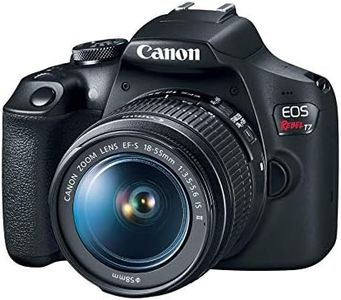
The Canon EOS 2000D (Rebel T7) is a solid choice for beginners stepping into DSLR photography. It offers a large APS-C sensor with 24.1 megapixels, which means you can capture detailed and sharp photos. It comes with an 18-55mm lens, covering wide-angle to short telephoto shots, suitable for everyday photography and learning different shooting styles. The camera supports Canon’s EF-S lenses, so you have room to upgrade to higher-quality lenses as your skills grow.

In terms of ease of use, the T7 has a straightforward automatic mode and simple controls that help new users get started without feeling overwhelmed. The 9-point autofocus system with phase detection is decent for basic focusing needs, though it might struggle a bit with fast-moving subjects or in low light compared to more advanced cameras. Video recording is available in full HD 1080p, which is good enough for casual videos but lacks 4K resolution that some newer models offer.

Connectivity includes built-in Wi-Fi and NFC, allowing you to easily transfer photos wirelessly to your smartphone or control the camera remotely—a handy feature for sharing images quickly and shooting from tricky angles. Battery life is standard for entry-level DSLRs, but keep a spare battery handy if you plan extended shoots. The bundle you’re looking at includes useful accessories like a tripod, memory card, and extra lenses, which adds good value for beginners who want a ready-to-go kit. On the downside, the screen is fixed and not touch-sensitive, which limits flexibility in shooting angles and menu navigation. Also, the optical viewfinder and the LCD screen offer modest resolution, so the preview image is not as sharp as on higher-end models. This makes the Canon EOS 2000D a beginner-friendly DSLR that covers essential photography needs with room to grow, especially suited for those who want to learn photography with solid image quality, easy sharing options, and a full kit of accessories, though it lacks some advanced features found in newer or higher-end cameras.

Rating
10.0
Chosen by1,126
Ease of Use
Sensor Size

Most important from
407 reviews

Ease of Use
This setup offers excellent value, combining Canon’s trusted quality with a comprehensive kit that’s perfect for beginners.
Sensor Size
The camera delivers amazing picture quality that impresses right out of the box.
#2

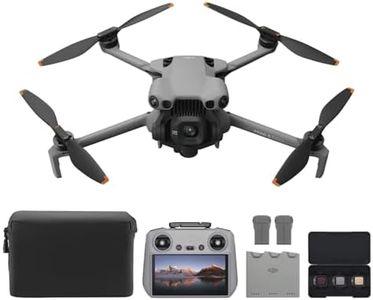
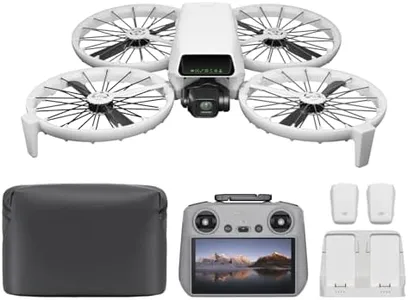
DJI Neo 2 Motion Fly More Combo With RC Motion 3 & Goggles N3

Rating
7.9
Ease of Use
Video Capabilities
Battery Life

Most important from
818 reviews

Ease of Use
Motion-based controls offer a smooth, intuitive way to pilot the drone that’s beginner-friendly and feels more like steering than traditional flying.
Video Capabilities
The drone delivers an incredibly immersive flying experience, making you feel like you're actually inside it with clear, responsive live video.
Battery Life
Despite shorter battery life compared to other models, the multiple included batteries and charging hub enable extended flying sessions without interruption.

The DJI Neo 2 Motion Fly More Combo is designed for beginners interested in aerial photography and FPV (first-person view) flying. It features a 12MP CMOS sensor that captures detailed 4K videos, which is excellent for high-quality photos and videos at this price and skill level. The drone is lightweight (just 151g) and portable, making it easy to carry and handle. Its ease of use is enhanced by intuitive features such as palm takeoff/landing, gesture control, and ActiveTrack, which helps keep subjects in focus automatically. This makes learning to fly smoother for newcomers.

The included DJI RC Motion 3 remote and Goggles N3 provide a more immersive flying experience, ideal for those keen on FPV flying. Battery life is supported by three included batteries and a charging hub, allowing longer flying sessions with quick swaps. Connectivity is strong with Bluetooth and Wi-Fi for stable transmission up to 10 kilometers. The removal of the DJI Fly app from Google Play means Android users need to manually download it from DJI’s site, which could be inconvenient. Also, while obstacle sensing is comprehensive, new pilots may still face a learning curve in controlling the drone safely indoors or in complex environments.

Lens compatibility is fixed, typical for drones, so external lenses aren’t an option. For those starting out with drone photography who want a device that’s simple to use yet capable of professional-looking 4K footage, the DJI Neo 2 is a solid choice, especially with the included accessories that support extended play and immersive flying.

Rating
7.9
Ease of Use
Video Capabilities
Battery Life

Most important from
818 reviews

Ease of Use
Motion-based controls offer a smooth, intuitive way to pilot the drone that’s beginner-friendly and feels more like steering than traditional flying.
Video Capabilities
The drone delivers an incredibly immersive flying experience, making you feel like you're actually inside it with clear, responsive live video.
Battery Life
Despite shorter battery life compared to other models, the multiple included batteries and charging hub enable extended flying sessions without interruption.
#3

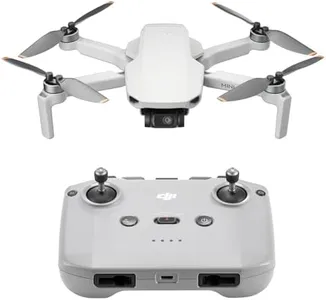
DJI Mini 5 Pro Fly More Combo With DJI RC 2, 1-Inch CMOS

Rating
7.6
Ease of Use
Battery Life

Most important from
636 reviews

Ease of Use
Flying the Mini 5 Pro is incredibly easy and intuitive, making it perfect for those new to drones.
Battery Life
The drone’s stable hovering, smooth takeoffs and landings, and solid battery life enhance the overall flying experience.

The DJI Mini 5 Pro Fly More Combo is a strong choice for beginners interested in drone photography and videography. It features a large 1-inch CMOS sensor that captures sharp 50MP still images and smooth 4K video at 60fps, which is excellent for detailed and vibrant footage. The drone’s compact, foldable design makes it easy to carry, and it weighs under 250 grams, so it's lightweight and convenient. The included DJI RC 2 remote controller simplifies flying, and the drone offers omnidirectional obstacle sensing, improving safety by helping avoid crashes, even during night flights.

The ActiveTrack 360° feature is helpful for keeping moving subjects in focus, which is great for capturing dynamic scenes. With up to 36 minutes of flight time per battery and three batteries included, you can expect extended flying sessions without frequent recharging. The flexible gimbal with 225° rotation allows creative shots from many angles, including vertical video for social media. Connectivity through Wi-Fi and Bluetooth is robust, but note that the DJI Fly app is no longer available on Google Play, requiring a manual download from DJI’s website.

Although the drone is beginner-friendly, new users should familiarize themselves with local regulations, especially for night flights. This drone offers advanced camera quality and flight features in an easy-to-use package, ideal for those starting in drone photography who want professional-level results without complex setup.

Rating
7.6
Ease of Use
Battery Life

Most important from
636 reviews

Ease of Use
Flying the Mini 5 Pro is incredibly easy and intuitive, making it perfect for those new to drones.
Battery Life
The drone’s stable hovering, smooth takeoffs and landings, and solid battery life enhance the overall flying experience.

Buying Guide for the Best Beginner Cameras

Choosing the right beginner camera can be a daunting task, but with a little guidance, you can find the perfect fit for your needs. The key is to understand the different specifications and how they impact your photography experience. By focusing on what you need from a camera, you can make an informed decision that will help you grow as a photographer.
Sensor SizeThe sensor size in a camera determines the quality of the images it can produce. Larger sensors capture more light and detail, resulting in better image quality, especially in low light conditions. Common sensor sizes include Full Frame, APS-C, and Micro Four Thirds. Full Frame sensors are the largest and offer the best image quality, but they are also more expensive and bulkier. APS-C sensors are smaller but still provide excellent image quality and are more affordable and compact. Micro Four Thirds sensors are even smaller and more portable, making them a good choice for travel and everyday use. Consider what you will be photographing and how important image quality is to you when choosing a sensor size.
MegapixelsMegapixels refer to the resolution of the camera's sensor, with more megapixels allowing for larger prints and more detailed images. However, more megapixels do not always mean better image quality. For most beginners, a camera with 16-24 megapixels is more than sufficient. This range provides a good balance between image quality and file size, making it easier to store and edit your photos. If you plan to do a lot of cropping or printing large photos, you might want to consider a camera with more megapixels.
Lens CompatibilityThe ability to change lenses is one of the main advantages of a DSLR or mirrorless camera. Different lenses can dramatically change the look and feel of your photos. When choosing a beginner camera, consider the range of lenses available for that system and how they fit your needs. For example, if you are interested in landscape photography, you might want a wide-angle lens, while a telephoto lens is better for wildlife photography. Make sure the camera you choose has a good selection of lenses that match your interests.
Ease of UseAs a beginner, you want a camera that is easy to use and understand. Look for a camera with a user-friendly interface, clear menus, and helpful features like guided modes or tutorials. Some cameras offer touchscreen controls, which can make navigating settings and reviewing photos more intuitive. Consider how comfortable you are with technology and choose a camera that matches your skill level. A camera that is too complicated can be frustrating and hinder your learning process.
Autofocus SystemThe autofocus system determines how quickly and accurately the camera can focus on a subject. For beginners, a reliable and fast autofocus system is important to ensure you capture sharp images, especially when photographing moving subjects. Look for a camera with a good number of autofocus points and features like face detection or eye tracking. These features can help you get better results without having to manually adjust the focus.
Video CapabilitiesMany beginner cameras also offer video recording capabilities, which can be a great way to explore different creative outlets. Consider the resolution and frame rates the camera can record at. Full HD (1080p) is sufficient for most uses, but if you are interested in higher quality video, look for a camera that can record in 4K. Also, check for additional features like microphone inputs or image stabilization, which can improve the quality of your videos. Think about how important video is to you and choose a camera that meets your needs.
Battery LifeBattery life is an important consideration, especially if you plan to use your camera for extended periods or while traveling. A camera with a longer battery life will allow you to take more photos and videos without needing to recharge. Look for cameras that offer a good number of shots per charge, and consider carrying a spare battery if you anticipate long shooting sessions. Think about how and where you will be using your camera and choose one with a battery life that suits your needs.
ConnectivityModern cameras often come with various connectivity options like Wi-Fi, Bluetooth, or NFC. These features allow you to easily transfer photos to your smartphone or computer, share them on social media, or control the camera remotely. For beginners, having these connectivity options can make the process of managing and sharing your photos more convenient. Consider how important these features are to you and choose a camera that offers the connectivity options you need.

FAQ

Most Popular Categories Right Now