We Use CookiesWe use cookies to enhance the security, performance, functionality and for analytical and promotional activities. By continuing to browse this site you are agreeing to our privacy policy

8 Best Autotune Pedal 2026 in the United States
How do we rank products for you?

Our technology thoroughly searches through the online shopping world, reviewing hundreds of sites. We then process and analyze this information, updating in real-time to bring you the latest top-rated products. This way, you always get the best and most current options available.

headphones-stars

Our Top Picks

#1

Winner

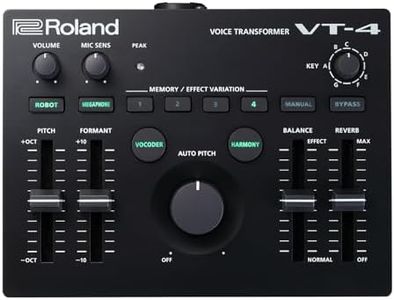
Roland VT-4 Vocal Transformer, Black

Rating
10.0
Chosen by1,466
Pitch Correction Modes
User Interface
Harmony and Effects

Most important from
974 reviews

Pitch Correction Modes
Pitch correction includes minor chords and works well with vocoding, with adjustable strength for different vocal techniques.
User Interface
Simply connect a dynamic microphone and headphones to start using the voice transformation options.
Harmony and Effects
The VT-4 is a great tool for vocal performance and special effects, with unexpected but valuable features.
Build Quality and Durability
Compact size and solid build make it feel like a real vocal tool.
Power Supply
Works great with both batteries and USB power, without needing a music keyboard.
Connectivity
Vocoding works well on its own, and you can set your own carrier sound through USB.

The Roland VT-4 Vocal Transformer is a versatile tool that works well for musicians and vocalists looking to enhance their performances with unique vocal effects. Its standout feature is the ability to apply both modern and retro effects like delay, reverb, and vocoding simultaneously, which can add depth and creativity to any vocal track. The capacity for real-time pitch and formant control makes it user-friendly, allowing for instant adjustments during performances or recording sessions.

One of the key strengths of the VT-4 is its compact design, making it portable and easy to integrate into a live setup. With a decent five-hour battery life when using NiMH batteries, it’s convenient for those who perform away from power sources. The user interface is straightforward, appealing to those who may not be very tech-savvy, so it’s accessible for beginners while still offering enough features to satisfy more seasoned users.

It’s important to note a few drawbacks. The device might not offer the same level of pitch correction that dedicated autotune pedals provide; it excels more in vocal modulation than precise pitch correction. Additionally, while it has USB connectivity for recording, its reliance on batteries may be a limitation for users who prefer devices powered through an adapter. Also, with a weight of 600 grams, it’s relatively lightweight, but some users might still prefer an even lighter option for extensive touring.

Rating
10.0
Chosen by1,466
Pitch Correction Modes
User Interface
Harmony and Effects

Most important from
974 reviews

Pitch Correction Modes
Pitch correction includes minor chords and works well with vocoding, with adjustable strength for different vocal techniques.
User Interface
Simply connect a dynamic microphone and headphones to start using the voice transformation options.
Harmony and Effects
The VT-4 is a great tool for vocal performance and special effects, with unexpected but valuable features.
Build Quality and Durability
Compact size and solid build make it feel like a real vocal tool.
Power Supply
Works great with both batteries and USB power, without needing a music keyboard.
Connectivity
Vocoding works well on its own, and you can set your own carrier sound through USB.
#2

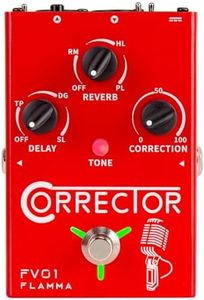
FLAMMA FV01 Vocal Effects Processor Pitch Correction Voice Pedal Vocal Stompbox Microphone Amplifier for Singer Live Singing Streaming Recording with Delay Reverb Acoustic Guitar Playing

Rating
10.0
Pitch Correction Modes
User Interface
Harmony and Effects

Most important from
567 reviews

Pitch Correction Modes
The pitch correction is subtle enough to assist with slight note slips without creating an overt autotune effect, making it ideal for live vocal support.
User Interface
The multi-mode input and extensive feature set offer versatility but also introduce complexity; some controls like tap tempo and delay level are less intuitive.
Harmony and Effects
Three vocal tone EQ modes—WARM, BRIGHT, and NORMAL—allow flexible voice shaping to suit different singing styles.
Build Quality and Durability
Compact and lightweight, the pedal fits well on a gigging board and integrates smoothly with other pedals without noticeable noise.
Power Supply
Power supply inclusion is appreciated, but the pedal's specific amperage needs may not be compatible with all standard guitar pedal power sources.
Connectivity
The pedal doubles effectively as a microphone preamp and provides reliable phantom power for condenser mics, adding valuable versatility.

The FLAMMA FV01 is a vocal effects pedal designed mainly for singers who want pitch correction along with some extra vocal effects. It offers three EQ modes—WARM, BRIGHT, and NORMAL—which help you shape your voice’s tone to suit different styles. The pedal supports pitch correction and adds effects like delay and reverb, making it a versatile tool for live performances or recording. It also doubles as a microphone amplifier and supports phantom power, which is useful if you use a condenser microphone.

You can connect both guitar and microphone inputs with separate output modes, giving some flexibility in how you mix signals. The user interface is straightforward, with a footswitch and knob controls, plus a clear tone LED indicator, making it easy to operate on stage. The device has a compact and lightweight build, but it uses a less common 2.5mm TRS audio jack rather than standard connectors, which might require adapters.

It runs on 9V DC power and is corded electric, so no batteries to worry about, though this limits portability a bit. This pedal suits amateur to semi-pro singers looking for an affordable, easy-to-use vocal effects pedal with basic autotune capabilities and useful tone shaping.

Rating
10.0
Pitch Correction Modes
User Interface
Harmony and Effects

Most important from
567 reviews

Pitch Correction Modes
The pitch correction is subtle enough to assist with slight note slips without creating an overt autotune effect, making it ideal for live vocal support.
User Interface
The multi-mode input and extensive feature set offer versatility but also introduce complexity; some controls like tap tempo and delay level are less intuitive.
Harmony and Effects
Three vocal tone EQ modes—WARM, BRIGHT, and NORMAL—allow flexible voice shaping to suit different singing styles.
Build Quality and Durability
Compact and lightweight, the pedal fits well on a gigging board and integrates smoothly with other pedals without noticeable noise.
Power Supply
Power supply inclusion is appreciated, but the pedal's specific amperage needs may not be compatible with all standard guitar pedal power sources.
Connectivity
The pedal doubles effectively as a microphone preamp and provides reliable phantom power for condenser mics, adding valuable versatility.
#3

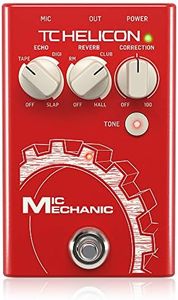
TC-Helicon TC Helicon MIC MECHANIC 2 Ultra-Simple Battery-Powered Vocal Effects Stompbox with Reverb, Echo and Pitch Correction

Rating
9.4
User Interface
Harmony and Effects
Power Supply

Most important from
508 reviews

User Interface
The pedal is incredibly easy to use with quick adjustments, making it perfect for live performances.
Harmony and Effects
It delivers high-quality vocal effects ranging from tape and room reverbs to smooth pitch correction.
Power Supply
Battery-powered operation works seamlessly alongside power supply options, offering great flexibility.
Connectivity
Phantom power is required for proper operation, and some users notice occasional noise likely due to grounding issues.

The TC Helicon MIC MECHANIC 2 is a compact vocal effects pedal designed mainly for singers looking for easy-to-use pitch correction and classic vocal effects like reverb and echo. One of its standout features is the battery-powered option, which makes it great for mobile setups without worrying about power cables. The pedal offers adaptive tone controls that help automatically balance EQ, compression, and gating, which is handy if you want good sound without spending time on complex adjustments. The pitch correction feature is straightforward with a dedicated control, but it doesn’t provide advanced harmony options or deep autotune modes seen in more professional units. Latency is generally low, so the pitch correction feels natural and doesn’t noticeably lag behind your singing. The user interface is simple, with clear knobs and tap tempo for syncing echoes to the beat, making it easy to operate even for beginners.

Build quality is solid and durable enough for regular stage use, and it includes a remote control option for added convenience. Connectivity is limited to an XLR input, so it’s focused on microphone use rather than instrument integration or USB audio interfaces. If you want a fuss-free pedal that improves your vocal sound with pitch correction, reverb, and echo without complicated settings, this is a reliable choice. For those who require advanced harmony effects or more diverse pitch correction modes, other pedals with richer feature sets may be more suitable.

Rating
9.4
User Interface
Harmony and Effects
Power Supply

Most important from
508 reviews

User Interface
The pedal is incredibly easy to use with quick adjustments, making it perfect for live performances.
Harmony and Effects
It delivers high-quality vocal effects ranging from tape and room reverbs to smooth pitch correction.
Power Supply
Battery-powered operation works seamlessly alongside power supply options, offering great flexibility.
Connectivity
Phantom power is required for proper operation, and some users notice occasional noise likely due to grounding issues.

Buying Guide for the Best Autotune Pedal

Choosing the right autotune pedal can significantly enhance your vocal performance by ensuring your pitch is always on point. When selecting an autotune pedal, it's important to consider various specifications that will affect how the pedal performs and suits your needs. Understanding these key specs will help you make an informed decision and find the best fit for your musical style and requirements.
Pitch Correction ModesPitch correction modes determine how the pedal adjusts your pitch. Some pedals offer chromatic correction, which adjusts to the nearest semitone, while others provide scale-based correction, which adjusts to specific notes within a chosen scale. Chromatic correction is useful for general pitch correction, while scale-based correction is ideal for specific musical genres or songs. Choose a pedal with the correction mode that best suits your musical style.
LatencyLatency refers to the delay between when you sing a note and when the corrected note is heard. Low latency is crucial for live performances to ensure that the corrected pitch is in sync with your singing. Latency can range from imperceptible to noticeable delays. For live performances, aim for a pedal with minimal latency to maintain the natural feel of your performance.
User InterfaceThe user interface includes the controls and display of the pedal. A simple and intuitive interface makes it easier to adjust settings quickly, especially during live performances. Look for pedals with clear displays and easy-to-use controls. If you prefer more control over your sound, consider a pedal with more advanced features and customizable settings.
Harmony and EffectsSome autotune pedals offer additional features like harmony generation and vocal effects. Harmony features can create multiple vocal harmonies from a single voice, adding depth to your performance. Vocal effects, such as reverb and delay, can enhance your sound. If you want to add more dimension to your vocals, look for a pedal that includes these extra features.
Build Quality and DurabilityBuild quality and durability are important, especially if you plan to use the pedal for live performances or frequent travel. A well-built pedal will withstand the rigors of regular use and provide reliable performance. Check for sturdy construction and high-quality materials to ensure the pedal can handle your needs.
Power SupplyThe power supply options for autotune pedals can vary. Some pedals run on batteries, while others require an external power adapter. Consider your setup and how you plan to use the pedal. Battery-powered pedals offer portability, but may require frequent battery changes. Pedals with external power adapters provide consistent power but may limit mobility.
ConnectivityConnectivity options determine how the pedal integrates with your other equipment. Common connections include XLR, 1/4-inch, and USB. Ensure the pedal has the necessary inputs and outputs to connect to your microphone, mixer, or recording equipment. If you plan to use the pedal in a studio setting, USB connectivity can be a useful feature for direct recording.

FAQ

Most Popular Categories Right Now