We Use CookiesWe use cookies to enhance the security, performance, functionality and for analytical and promotional activities. By continuing to browse this site you are agreeing to our privacy policy

10 Best Astronomical Telescopes 2026 in the United States
How do we rank products for you?

Our technology thoroughly searches through the online shopping world, reviewing hundreds of sites. We then process and analyze this information, updating in real-time to bring you the latest top-rated products. This way, you always get the best and most current options available.

headphones-stars

Our Top Picks

#1

Winner

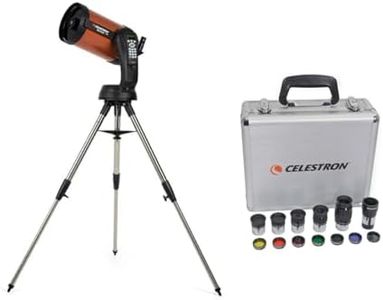
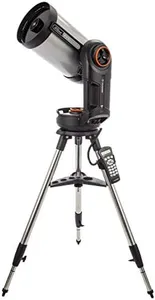
Celestron - NexStar Evolution 8 WiFi Enabled Computerized Telescope - 8” Schmidt-Cassegrain Telescope SCT - Control via Smartphone App - 10-Hour Lithium Battery - iPhone and Android Compatible

Rating
10.0
Chosen by1,403
Aperture
Mount Type
Optical Design

Most important from
73 reviews

Aperture
Viewing deep sky objects like the Orion Nebula is stunning, confirming the high optical quality.
Mount Type
The computerized GoTo system removes the hassle of locating objects, allowing more time to enjoy observing.
Optical Design
The telescope offers clear and bright views of the moon and stars with solid build quality and great design.
Portability
Setup is incredibly straightforward, requiring minimal instructions, and alignment is fast and precise using the smartphone app.
Accessories
Using the StarSense AutoAlign device with the scope dramatically speeds up finding celestial objects compared to older manual methods.

The Celestron NexStar Evolution 8 is a computerized 8-inch Schmidt-Cassegrain telescope designed for astronomy enthusiasts who value both power and convenience. Its large 8-inch aperture lets in plenty of light, providing bright and detailed views of planets, stars, and deep-sky objects. With a long focal length of 2032mm, it offers high magnification, great for observing fine details. The telescope uses an altazimuth mount with computerized GoTo capability, which means it can automatically find and track celestial objects through a smartphone app, simplifying the experience for users who may not be familiar with star-hopping.

Portability is decent: while it’s not ultra-lightweight at about 17.5 kg, the built-in 10-hour rechargeable battery and integrated handles make it easier to take outside without needing extra power sources. The optical design (Schmidt-Cassegrain) is compact and offers quality optics with StarBright XLT coatings to enhance image clarity and brightness. Included accessories like two trays for eyepieces and a USB charging port for phones add handy convenience.

The telescope’s weight and size may be a bit challenging for younger users or those needing ultra-portable gear. Also, it requires manual focusing, which might take some practice for beginners. The altazimuth mount, while user-friendly, is not the best option for long-exposure astrophotography compared to equatorial mounts. This model suits intermediate users who want powerful optics combined with modern tech features, especially those interested in casual observing and easy setup rather than advanced astrophotography.

Rating
10.0
Chosen by1,403
Aperture
Mount Type
Optical Design

Most important from
73 reviews

Aperture
Viewing deep sky objects like the Orion Nebula is stunning, confirming the high optical quality.
Mount Type
The computerized GoTo system removes the hassle of locating objects, allowing more time to enjoy observing.
Optical Design
The telescope offers clear and bright views of the moon and stars with solid build quality and great design.
Portability
Setup is incredibly straightforward, requiring minimal instructions, and alignment is fast and precise using the smartphone app.
Accessories
Using the StarSense AutoAlign device with the scope dramatically speeds up finding celestial objects compared to older manual methods.
#2

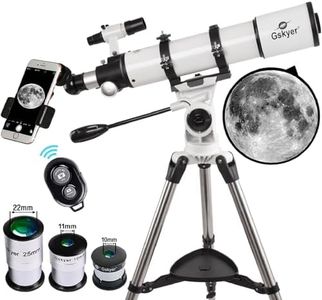
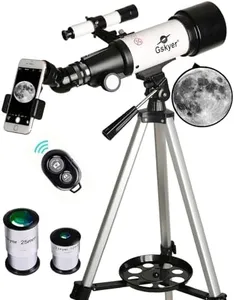
Gskyer Telescope, 70mm Aperture 400mm AZ Mount Astronomical Refracting Telescope for Kids Beginners - Travel Telescope with Carry Bag, Phone Adapter and Wireless Remote.

Rating
9.4
Aperture
Focal Length
Mount Type

Most important from
22024 reviews

Aperture
With a 70mm aperture and 400mm focal length, it provides clear and bright views of the Moon, planets, and distant stars.
Focal Length
With a 70mm aperture and 400mm focal length, it provides clear and bright views of the Moon, planets, and distant stars.
Mount Type
The AZ (Altazimuth) mount is simple and intuitive, making it easy to track celestial objects across the sky.
Portability
The lightweight and portable design makes it ideal for kids, and the AZ mount allows for smooth, intuitive movements when aiming at objects in the sky.
Accessories
The included eyepieces and finderscope make locating objects easier, even for beginners.

The Gskyer Telescope is designed with beginners and kids in mind, making it a user-friendly option for those new to astronomy. It features a 70mm aperture and a 400mm focal length, providing clear and bright views of the moon and stars. The fully coated optical glass lens ensures high-quality images while protecting the eyes, which is a major plus for young users.

The telescope comes with two eyepieces and a 3x Barlow lens, offering versatile magnification options. The 5x24 finder scope helps in locating celestial objects with ease, making it less frustrating for beginners. The included smartphone adapter and wireless remote are excellent additions for those interested in capturing and sharing their astronomical observations.

It also includes an adjustable aluminum tripod and a carry bag, enhancing its portability and convenience for travel. However, the altazimuth mount, while simple to use, may limit precise tracking of celestial objects as compared to equatorial mounts. Weighing just 5.7 pounds, it is fairly lightweight, but some users may find the build quality less robust. In summary, the Gskyer Telescope is a great starting point for young astronomers or casual stargazers who value portability and easy setup, though more serious enthusiasts might eventually look for more advanced features.

Rating
9.4
Aperture
Focal Length
Mount Type

Most important from
22024 reviews

Aperture
With a 70mm aperture and 400mm focal length, it provides clear and bright views of the Moon, planets, and distant stars.
Focal Length
With a 70mm aperture and 400mm focal length, it provides clear and bright views of the Moon, planets, and distant stars.
Mount Type
The AZ (Altazimuth) mount is simple and intuitive, making it easy to track celestial objects across the sky.
Portability
The lightweight and portable design makes it ideal for kids, and the AZ mount allows for smooth, intuitive movements when aiming at objects in the sky.
Accessories
The included eyepieces and finderscope make locating objects easier, even for beginners.
#3

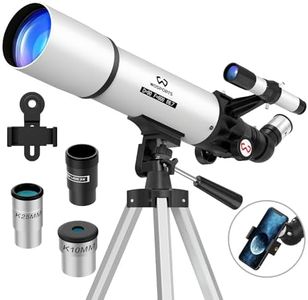
Gskyer Telescope 600x90mm AZ Astronomical Refractor Telescope for Adults Astronomy, German Technology Scope

Rating
9.1
Aperture
Focal Length
Mount Type

Most important from
924 reviews

Aperture
With its 70mm aperture and 400mm focal length, this refracting telescope offers decent magnification for observing celestial objects.
Focal Length
With its 70mm aperture and 400mm focal length, this refracting telescope offers decent magnification for observing celestial objects.
Mount Type
The AZ mount is simple and intuitive, making it easy to track celestial objects across the sky.
Optical Design
This telescope provides clear and bright views of the Moon, planets, and distant stars.
Portability
With its lightweight and portable design, this telescope is ideal for kids, making it simple to set up and operate.
Accessories
The included eyepieces and finderscope make locating objects easier, even for beginners.

The Gskyer Telescope 600x90mm AZ Astronomical Refractor Telescope is a solid choice for adults interested in astronomy. Its key strength lies in its high-quality optics with a 600mm focal length and a 90mm aperture, allowing for clear and detailed images of the night sky. The fully coated optics glass lens enhances image quality and protects your eyes.

The telescope also offers high magnification options with three replaceable eyepieces (24X, 60X, and 120X) and a 3x Barlow lens that triples the magnifying power of each eyepiece, making it suitable for viewing a variety of celestial objects. The adjustable aluminum tripod provides flexibility in viewing positions, with a height range from 31.5 inches to 49 inches. This makes it adaptable for different users and locations.

The telescope is user-friendly, requiring no tools for setup, which is ideal for beginners. However, its weight of 18 pounds might make it less portable compared to smaller models. The altazimuth mount is straightforward to use but may not offer the precision needed for advanced users who require more control over their viewing angles. Included accessories such as the reflex finderscope and manual focus add to the value. The product comes with a 12-month support warranty, which is reassuring for new users. Nonetheless, those seeking more advanced features or greater portability might need to consider other options.

Rating
9.1
Aperture
Focal Length
Mount Type

Most important from
924 reviews

Aperture
With its 70mm aperture and 400mm focal length, this refracting telescope offers decent magnification for observing celestial objects.
Focal Length
With its 70mm aperture and 400mm focal length, this refracting telescope offers decent magnification for observing celestial objects.
Mount Type
The AZ mount is simple and intuitive, making it easy to track celestial objects across the sky.
Optical Design
This telescope provides clear and bright views of the Moon, planets, and distant stars.
Portability
With its lightweight and portable design, this telescope is ideal for kids, making it simple to set up and operate.
Accessories
The included eyepieces and finderscope make locating objects easier, even for beginners.

Buying Guide for the Best Astronomical Telescopes

Choosing the right astronomical telescope can be a thrilling yet daunting task, especially for beginners. The key to making the best choice is understanding the specifications that matter most and how they align with your observing goals. Whether you're interested in viewing planets, deep-sky objects, or just casual stargazing, knowing what to look for in a telescope will help you make an informed decision.
ApertureAperture refers to the diameter of the telescope's main optical component (lens or mirror). It is crucial because it determines how much light the telescope can gather, which directly affects the brightness and clarity of the images you see. Apertures can range from small (around 60mm) to large (over 200mm). For beginners, a medium aperture (around 100-150mm) is often a good balance between portability and performance. Larger apertures are better for viewing faint deep-sky objects but can be more cumbersome and expensive.
Focal LengthFocal length is the distance between the telescope's main optical component and the point where it forms an image. It affects the magnification and field of view. Short focal lengths (under 1000mm) provide wider fields of view, which are great for observing large areas of the sky and deep-sky objects. Longer focal lengths (over 1000mm) offer higher magnification, ideal for viewing planets and the moon. Consider what you want to observe most often to decide the right focal length for you.
Mount TypeThe mount is what holds the telescope steady and allows you to aim it. There are two main types: alt-azimuth and equatorial. Alt-azimuth mounts are simpler and easier to use, making them great for beginners and casual stargazing. Equatorial mounts are more complex but allow for better tracking of celestial objects, which is essential for astrophotography and serious observing. Choose a mount based on your experience level and observing goals.
Optical DesignTelescopes come in different optical designs, such as refractors, reflectors, and compound (catadioptric) telescopes. Refractors use lenses and are known for their sharp images and ease of use, making them good for beginners. Reflectors use mirrors and offer larger apertures at lower costs, ideal for deep-sky observing. Compound telescopes combine lenses and mirrors, providing versatility and compactness, suitable for both planetary and deep-sky observations. Your choice should depend on what you prioritize: image quality, cost, or versatility.
PortabilityPortability refers to how easy it is to transport and set up the telescope. Smaller, lighter telescopes are easier to carry and set up, making them ideal for casual stargazing and travel. Larger telescopes offer better performance but can be heavy and cumbersome. If you plan to observe from different locations or travel frequently, a more portable telescope might be the best choice. If you have a permanent observing spot, you can opt for a larger, less portable model.
AccessoriesAccessories can enhance your observing experience. Common accessories include eyepieces, finderscopes, and filters. Eyepieces determine the magnification and field of view; having a variety allows you to adjust based on what you're observing. Finderscopes help you locate objects in the sky more easily. Filters can improve the visibility of certain celestial objects. Consider what accessories are included with the telescope and what additional ones you might need based on your observing interests.

FAQ

Most Popular Categories Right Now