We Use CookiesWe use cookies to enhance the security, performance, functionality and for analytical and promotional activities. By continuing to browse this site you are agreeing to our privacy policy

10 Best Starter Cameras 2026 in the United States
How do we rank products for you?

Our technology thoroughly searches through the online shopping world, reviewing hundreds of sites. We then process and analyze this information, updating in real-time to bring you the latest top-rated products. This way, you always get the best and most current options available.

headphones-stars

Our Top Picks

#1

Winner

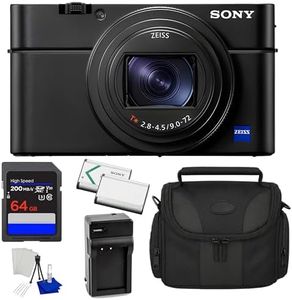
Sony RX100 VII Premium Compact Camera with 1.0-Type Stacked CMOS Sensor, ZEISS Lens, (DSC-RX100M7) Bundle with 64GB SD Memory Card + Extra Battery + Charger + Bag + Starter Kit + More (Renewed)

Rating
10.0
Chosen by1,208
Autofocus System
Image Stabilization
Video Capabilities

Most important from
2 reviews

Autofocus System
Fast and accurate autofocus helps capture sharp images even in challenging conditions.
Image Stabilization
Optical image stabilization effectively reduces blur from hand shake, ideal for beginners.
Video Capabilities
Supports smooth 4K video recording and slow motion for creative video projects.
Connectivity
Includes Wi-Fi, Bluetooth, and USB-C for quick sharing and remote control.

The Sony RX100 VII is a high-quality compact camera that stands out for beginners wanting to step up their photography without dealing with bulky gear. It has a large 1.0-type stacked CMOS sensor and 20.1 megapixels, which means you get sharp, detailed images even in low light. The built-in ZEISS 24-200mm zoom lens offers great versatility for everything from wide landscapes to distant subjects, with minimal distortion. Autofocus is fast and accurate thanks to a hybrid system, making it easier to capture crisp shots. Image stabilization is optical, helping reduce blur from hand shake, which is a bonus for beginners who might not always hold the camera steady.

Video options are impressive too, supporting smooth 4K recording and slow motion, ideal for creative projects or vlogging. The camera is very compact and lightweight, so it’s easy to carry around and use daily. It also includes Wi-Fi, Bluetooth, and USB-C connectivity for quick sharing and remote control. The bundle adds value with an extra battery, memory card, charger, and bag, making it ready to use out of the box.

On the downside, as a compact with a fixed lens, it lacks interchangeable lens flexibility found in bigger cameras, and it’s not waterproof, so extra care is needed in tough conditions. Battery life is decent but may require carrying the spare for longer outings. While packed with advanced features, some beginners might find the number of options a bit overwhelming initially. The RX100 VII remains an excellent choice for new photographers seeking a powerful, easy-to-carry starter camera that grows with their skills.

Rating
10.0
Chosen by1,208
Autofocus System
Image Stabilization
Video Capabilities

Most important from
2 reviews

Autofocus System
Fast and accurate autofocus helps capture sharp images even in challenging conditions.
Image Stabilization
Optical image stabilization effectively reduces blur from hand shake, ideal for beginners.
Video Capabilities
Supports smooth 4K video recording and slow motion for creative video projects.
Connectivity
Includes Wi-Fi, Bluetooth, and USB-C for quick sharing and remote control.
#2

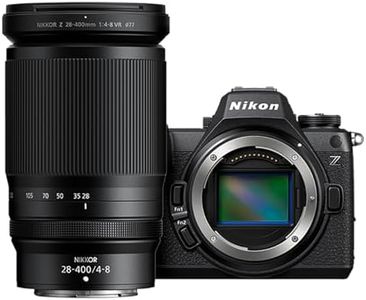
Nikon Z6III Mirrorless Camera 28-400mm Lens Kits

Rating
9.4
Autofocus System
Ease of Use
Battery Life

Most important from
16 reviews

Autofocus System
Advanced features like 3D tracking enhance the shooting experience, making it easier to capture moving subjects accurately.
Ease of Use
The learning curve is steep, reflecting the camera's complexity and abundance of professional-level settings.
Battery Life
The kit arrives complete with essential accessories, including the battery, ensuring it's ready to use right out of the box.

The Nikon Z6III with the 28-400mm lens kit is a powerful mirrorless camera that offers a full-frame 24.5 MP sensor, which captures sharp and detailed images—a big plus for those new to serious photography who want quality photos. Its autofocus system is advanced and fast, with 299 hybrid focus points and improved face detection, making it easier to capture clear shots even in challenging lighting. The built-in 8-stop image stabilization helps reduce blur from shaky hands, which beginners will appreciate.

For video enthusiasts, it supports impressive 6K and 4K recording at high frame rates, plus slow-motion options, so it's great if you want to experiment beyond photos. The electronic viewfinder is bright and sharp, giving a clear preview even outdoors. The camera also has a wide ISO range for shooting in low light. Connectivity options like Bluetooth, Wi-Fi, and USB make it easy to share images or control the camera remotely. The dual SD card slots allow for more storage flexibility. The 3.2-inch articulating screen helps with shooting from various angles, which adds to ease of use.

This camera is quite advanced and may be overwhelming for complete beginners due to its many features and settings. It weighs about 3.1 pounds with the lens, which is heavier than typical starter models, possibly making it less convenient for casual use or travel. Battery life is decent but not exceptional for long shooting sessions, so carrying extra batteries is advisable. Lens compatibility is good within Nikon Z-mount lenses, and the included 28-400mm zoom lens covers everything from wide to telephoto, reducing the need to change lenses frequently. The Nikon Z6III kit suits new photographers serious about learning and growing their skills, especially those interested in strong video features, while casual users or those wanting a lightweight, simple camera might find it a bit complex and heavy.

Rating
9.4
Autofocus System
Ease of Use
Battery Life

Most important from
16 reviews

Autofocus System
Advanced features like 3D tracking enhance the shooting experience, making it easier to capture moving subjects accurately.
Ease of Use
The learning curve is steep, reflecting the camera's complexity and abundance of professional-level settings.
Battery Life
The kit arrives complete with essential accessories, including the battery, ensuring it's ready to use right out of the box.
#3

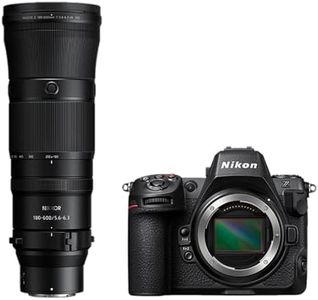
Nikon Z8 Camera 180-600mm Lens Kit,Black

Rating
9.4
Lens Compatibility

Most important from
4 reviews

Lens Compatibility
The Nikon Z8 paired with the 180-600mm lens opens up a whole new world of telephoto possibilities.

The Nikon Z8 Camera 180-600mm Lens Kit is a high-performance mirrorless camera featuring a large full-frame 45.7MP sensor, which delivers exceptional image quality and detail. Its autofocus system is very advanced, using deep learning technology to track a wide variety of subjects accurately, making it useful for wildlife and sports photography. The included 180-600mm telephoto lens offers versatile zoom for distant subjects, paired with effective optical image stabilization to reduce blur from hand movement.

Video capabilities are impressive, supporting internal 8K and 4K recording, which is more than most beginners need but great for those interested in videography. Connectivity options include Bluetooth, Wi-Fi, and USB for easy file transfer and remote control. This camera is quite heavy and expensive, with a learning curve that might be steep for true beginners. Its powerful features are designed more for advanced users or those committed to growing their skills rather than casual or first-time photographers.

Battery life is decent, but heavy use of high-speed shooting or video may require extra batteries. The camera's interface is modern with a bright, high-resolution screen, but some settings might feel complex at first. This kit suits beginner photographers who want a serious, future-proof system and are willing to invest time and effort to learn professional-level controls and features.

Rating
9.4
Lens Compatibility

Most important from
4 reviews

Lens Compatibility
The Nikon Z8 paired with the 180-600mm lens opens up a whole new world of telephoto possibilities.

Buying Guide for the Best Starter Cameras

Choosing a starter camera can be an exciting yet overwhelming experience, especially with the wide variety of options available. The key is to find a camera that matches your needs and helps you grow as a photographer. To make an informed decision, it's important to understand the key specifications and how they impact your photography. Here are some essential specs to consider when picking a starter camera.
Sensor SizeThe sensor size of a camera determines the quality of the images it can produce. Larger sensors generally capture more light and detail, resulting in better image quality, especially in low-light conditions. Common sensor sizes include Full Frame, APS-C, and Micro Four Thirds. Full Frame sensors are the largest and offer the best image quality, but they are also more expensive and bulkier. APS-C sensors are smaller and more affordable, making them a popular choice for beginners. Micro Four Thirds sensors are even smaller and more compact, ideal for those who prioritize portability. Consider your priorities: if image quality is paramount, go for a larger sensor; if portability and affordability are more important, a smaller sensor might be the better choice.
MegapixelsMegapixels refer to the resolution of the camera's sensor, indicating how many millions of pixels the sensor can capture. Higher megapixels mean more detail in your photos, which is useful for large prints or cropping images without losing quality. However, more megapixels also mean larger file sizes. For most beginners, a camera with 16-24 megapixels is sufficient, providing a good balance between image quality and file size. If you plan to do a lot of cropping or large-scale printing, you might want to consider a camera with more megapixels.
Lens CompatibilityLens compatibility is crucial because the lens you use can significantly impact the quality and versatility of your photos. Some cameras come with interchangeable lenses, allowing you to switch between different types of lenses for various shooting scenarios. Others have fixed lenses, which can be limiting. If you want to experiment with different types of photography, such as macro, portrait, or landscape, an interchangeable lens system is a better choice. Check the availability and variety of lenses for the camera system you are considering to ensure it meets your future needs.
Autofocus SystemThe autofocus system determines how quickly and accurately the camera can focus on a subject. This is especially important for capturing moving subjects or shooting in low-light conditions. Cameras with more autofocus points and advanced tracking features generally perform better. For beginners, a camera with a reliable and easy-to-use autofocus system is essential. Look for cameras with at least 9-11 autofocus points for general use. If you plan to shoot sports, wildlife, or fast-moving subjects, consider a camera with more advanced autofocus capabilities.
Image StabilizationImage stabilization helps reduce blur caused by camera shake, allowing you to take sharper photos, especially in low-light conditions or when using a long zoom lens. There are two types of image stabilization: in-body and lens-based. In-body stabilization works with any lens attached to the camera, while lens-based stabilization is specific to certain lenses. For beginners, in-body stabilization can be more versatile and beneficial. If you often shoot handheld or in low light, look for a camera with good image stabilization features.
Video CapabilitiesMany starter cameras also offer video recording capabilities, which can be a great addition if you plan to shoot videos alongside photos. Key factors to consider include resolution (such as Full HD or 4K), frame rates, and additional features like microphone input and autofocus during video recording. For casual video recording, Full HD (1080p) is usually sufficient. If you are interested in higher quality or more professional video work, look for a camera that offers 4K resolution and additional video features.
Ease of UseEase of use is an important factor for beginners. Look for a camera with a user-friendly interface, intuitive controls, and helpful features like guided modes or tutorials. Touchscreen interfaces can also make navigation and settings adjustments easier. A camera that is easy to use will help you learn and enjoy photography without getting frustrated by complex controls.
Battery LifeBattery life is an important consideration, especially if you plan to use your camera for extended periods or while traveling. Cameras with longer battery life allow you to shoot more without needing to recharge or carry extra batteries. Check the manufacturer's specifications for the estimated number of shots per charge. For most beginners, a camera that offers around 300-500 shots per charge is adequate. If you plan to shoot extensively or in remote locations, consider a camera with longer battery life or the option to use external battery packs.
ConnectivityConnectivity features, such as Wi-Fi, Bluetooth, and NFC, allow you to easily transfer photos to your smartphone or computer, share them on social media, or control the camera remotely. These features can be very convenient for beginners who want to quickly share their photos or use their camera in creative ways. Look for a camera with built-in connectivity options that match your needs and preferences.

FAQ

Most Popular Categories Right Now