We Use CookiesWe use cookies to enhance the security, performance, functionality and for analytical and promotional activities. By continuing to browse this site you are agreeing to our privacy policy

10 Best Radio Frequency Detectors 2026 in the United States
How do we rank products for you?

Our technology thoroughly searches through the online shopping world, reviewing hundreds of sites. We then process and analyze this information, updating in real-time to bring you the latest top-rated products. This way, you always get the best and most current options available.

headphones-stars

Our Top Picks

#1

Winner

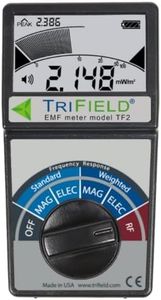
TF2 EMF Pollution Meter – 3-in-1 Magnetic, Electric & RF Field Detection

Rating
10.0
Chosen by1,280
Sensitivity
Portability
Ease of Use

Most important from
3570 reviews

Sensitivity
The meter provides accurate and reliable EMF readings that help establish a solid baseline for assessing exposure near power lines and other sources.
Portability
The device is sturdy, well-built, and comes with a convenient carrying case, making it easy to use and transport.
Ease of Use
Backlighting and sound toggle buttons inside the battery compartment do not interfere with the user experience when the backlight is kept on and sound is disabled.

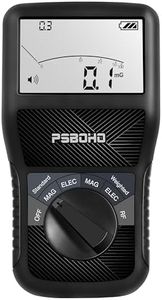
The TriField EMF Meter Model TF2 is a versatile handheld detector designed to measure three types of electromagnetic fields: radio frequency (RF), magnetic, and electric fields. This makes it a solid choice for anyone wanting to check exposure from common sources like 4G and 5G cell phones, WiFi routers, Bluetooth devices, smart meters, and power lines. Its detection modes include a standard and weighted frequency response, which helps highlight how EMF signals might affect the body, a useful feature for health-conscious users. The meter provides clear readings with signal level, peak level, and a fast indicator bar that is particularly helpful for spotting radio pulses quickly.

Portability is good: it’s lightweight (11 ounces) and compact, coming with a soft carrying case, which makes it easy to take around your home or workplace. It runs on a standard 9V alkaline battery, which is convenient but may require occasional replacement. The device is user-friendly for beginners, with simple controls and a ready-to-use setup out of the box. Made in the USA with a one-year warranty, it offers reliable build quality.

For those seeking a handheld EMF detector that handles multiple field types and is straightforward to operate, the TriField TF2 serves as a dependable option, though individuals needing very detailed frequency analysis or longer battery life might consider other models.

Rating
10.0
Chosen by1,280
Sensitivity
Portability
Ease of Use

Most important from
3570 reviews

Sensitivity
The meter provides accurate and reliable EMF readings that help establish a solid baseline for assessing exposure near power lines and other sources.
Portability
The device is sturdy, well-built, and comes with a convenient carrying case, making it easy to use and transport.
Ease of Use
Backlighting and sound toggle buttons inside the battery compartment do not interfere with the user experience when the backlight is kept on and sound is disabled.
#2

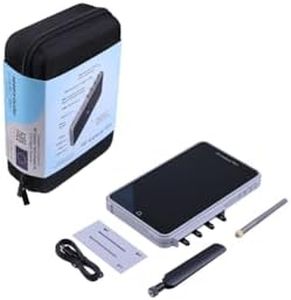
RF Explorer® Pro — Touch Screen Advanced Spectrum Analyzer, 15MHz to 3.3/6/7.5GHz Precise Sweep, 1280×800 High-Resolution Display, Modular Licensed Design for Professional RF Analysis

Rating
9.7
Frequency Range
Battery Life
Ease of Use

Most important from
6 reviews

Frequency Range
The signal level readings can vary significantly, making it difficult to fully trust the accuracy for narrowband RF measurements.
Battery Life
Battery life is sufficient to cover most typical field tasks, but users should monitor charge levels if the device is not used regularly.
Ease of Use
The device performs well for frequency coordination and in-building wireless enhancement training when the core functions are understood.

The RF Explorer Pro is a compact, professional-grade spectrum analyzer designed for engineers and serious RF hobbyists. It covers a wide frequency range starting at 15 MHz and can be expanded up to 7.5 GHz with modular licenses, making it versatile for various RF detection tasks. The device features a bright and clear 8-inch touchscreen, which makes viewing and analyzing signals straightforward, even for users who may not be experts.

Multiple detection modes like Zero Span, Waterfall (2D/3D), and Frequency Coordination offer advanced ways to monitor and diagnose RF signals, helpful for antenna tuning, cable diagnostics, and interference detection. Its sensitivity is demonstrated by a rapid power meter response (100 microseconds), allowing it to quickly detect changes in signal strength. Portability is a strong point, with a lightweight design and an internal rechargeable battery that lasts up to about 5 hours, suitable for field use. The battery life may be a consideration for extended long-term outdoor work without access to recharge.

The modular licensing system adds flexibility but also entails additional costs and online activation if higher frequency ranges or extra features are needed. Connectivity options like USB, HDMI, and micro SD slots enhance usability but could appear somewhat complex for beginners. This device is well suited for users needing precise, portable RF detection with advanced features, although casual users might find the additional licensing and connectivity more than necessary.

Rating
9.7
Frequency Range
Battery Life
Ease of Use

Most important from
6 reviews

Frequency Range
The signal level readings can vary significantly, making it difficult to fully trust the accuracy for narrowband RF measurements.
Battery Life
Battery life is sufficient to cover most typical field tasks, but users should monitor charge levels if the device is not used regularly.
Ease of Use
The device performs well for frequency coordination and in-building wireless enhancement training when the core functions are understood.
#3

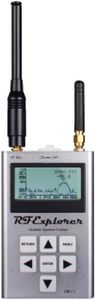
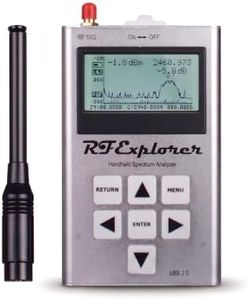
RF Explorer Spectrum Analyzer ISM Combo - Handheld Frequency Analyzer for Ham Radio, Wireless Devices, WiFi Networks, Audio Engineers (ISM Combo)

Rating
8.8
Frequency Range
Sensitivity
Detection Modes

Most important from
49 reviews

Frequency Range
Provides a clear baseline of existing frequencies in a venue, helping avoid conflicts and optimize wireless microphone performance.
Sensitivity
Delivers impressive accuracy rivaling much more expensive spectrum analyzers, making it a great value for certification and testing needs.
Detection Modes
Effectively scans environments to detect interference, ensuring reliable operation for remote-controlled aircraft and other wireless devices.

The RF Explorer Spectrum Analyzer ISM Combo is a handheld device designed for those working with ham radios, WiFi, and other wireless equipment. It covers a useful frequency range from 240 MHz up to 960 MHz and also the 2.35 to 2.55 GHz band, which makes it versatile for detecting signals in common wireless communication ranges. Its sensitivity and dynamic range allow it to pick up very weak signals down to around -115 dBm, which is good for detailed analysis. The analyzer offers a frequency resolution of 1 kHz, enabling precise identification of signals within its frequency span.

Portability is a strong point here — weighing under 10 ounces and small enough to carry easily, it’s suitable for fieldwork. It operates on a single lithium-ion battery, which is included, helping with convenience and decent battery life for on-the-go use. The device also has built-in modes for generating test signals in the 2.4 GHz range, which can be handy for troubleshooting.

While the analyzer excels in core spectrum analysis tasks, it might not be the best fit for users who need very wide frequency coverage beyond the specified bands or more advanced detection modes. The display and controls are straightforward but somewhat basic, so beginners might need some time to get comfortable with its interface. The device is not discontinued, which means support and updates may still be accessible. This makes the ISM Combo a solid choice for hobbyists and professionals needing a portable and reliable spectrum analyzer focused on common wireless bands, balancing sensitivity, frequency coverage, and ease of use in a compact form.

Rating
8.8
Frequency Range
Sensitivity
Detection Modes

Most important from
49 reviews

Frequency Range
Provides a clear baseline of existing frequencies in a venue, helping avoid conflicts and optimize wireless microphone performance.
Sensitivity
Delivers impressive accuracy rivaling much more expensive spectrum analyzers, making it a great value for certification and testing needs.
Detection Modes
Effectively scans environments to detect interference, ensuring reliable operation for remote-controlled aircraft and other wireless devices.

Buying Guide for the Best Radio Frequency Detectors

When choosing a radio-frequency detector, it's important to understand the key specifications and how they relate to your specific needs. Radio-frequency detectors are used to identify and measure radio waves, which can be useful for a variety of applications such as detecting hidden cameras, listening devices, or other electronic surveillance equipment. By understanding the key specs, you can make an informed decision and select the best detector for your requirements.
Frequency RangeThe frequency range of a radio-frequency detector indicates the span of frequencies it can detect. This is important because different devices operate on different frequencies. A wider frequency range means the detector can identify a broader array of devices. Typically, frequency ranges are divided into low (up to 1 GHz), medium (1 GHz to 6 GHz), and high (above 6 GHz). If you need to detect a variety of devices, opt for a detector with a wide frequency range. For specific applications, such as detecting Wi-Fi or Bluetooth devices, ensure the detector covers those specific frequencies.
SensitivitySensitivity refers to the detector's ability to pick up weak signals. Higher sensitivity means the detector can identify signals from devices that are further away or have lower power. Sensitivity is usually measured in decibels (dB). High sensitivity (e.g., -70 dB or lower) is ideal for detecting faint signals, while lower sensitivity (e.g., -50 dB or higher) may suffice for stronger signals. Consider your environment and the strength of the signals you expect to encounter when choosing the sensitivity level.
Detection ModesDetection modes refer to the different ways a detector can identify signals. Common modes include audio alerts, visual indicators, and vibration alerts. Some advanced models may offer multiple modes simultaneously. Audio alerts provide a sound when a signal is detected, visual indicators use lights or displays, and vibration alerts are useful in noisy environments. Choose a detector with detection modes that suit your preferences and the environment in which you'll be using it.
PortabilityPortability is about the size and weight of the detector, which affects how easily you can carry and use it. Smaller, lightweight detectors are more convenient for on-the-go use, while larger models may offer more features but can be cumbersome. Consider how and where you plan to use the detector. If you need to carry it frequently or use it in various locations, a compact and lightweight model is preferable.
Battery LifeBattery life indicates how long the detector can operate on a single charge or set of batteries. This is crucial for ensuring the detector is reliable during extended use. Battery life can range from a few hours to several days, depending on the model and usage. For frequent or prolonged use, choose a detector with a longer battery life or one that offers rechargeable batteries. If you only need the detector for short periods, battery life may be less critical.
Ease of UseEase of use refers to how user-friendly the detector is. This includes the simplicity of its controls, the clarity of its display, and the intuitiveness of its operation. A detector that is easy to use will save you time and frustration. Look for models with clear instructions, straightforward controls, and easy-to-read displays. If you're new to using radio-frequency detectors, prioritize ease of use to ensure you can operate the device effectively.

FAQ

Most Popular Categories Right Now