10 Best Industrial Thermal Label Printers 2026 in the United States

Related Products
Up to 33% off
Our technology thoroughly searches through the online shopping world, reviewing hundreds of sites. We then process and analyze this information, updating in real-time to bring you the latest top-rated products. This way, you always get the best and most current options available.

Our Top Picks
Winner
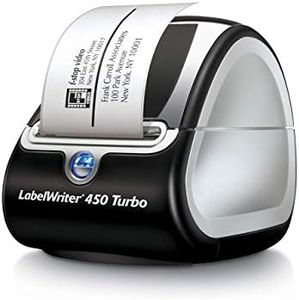
DYMO Label Printer | LabelWriter 450 Turbo Direct Thermal Label Printer, Fast Printing, Great for Labeling, Filing, Shipping, Mailing, Barcodes and More, Home & Office Organization (Renewed)
Most important from
64 reviews
The DYMO LabelWriter 450 Turbo is a straightforward thermal label printer designed mainly for office and light industrial use, especially where quick, small-format label printing is needed. It prints labels at a resolution of 203 dpi, which is adequate for clear text, barcodes, and basic images. Its standout feature is speed—capable of printing up to 71 labels per minute, making it well suited for tasks like shipping, filing, or inventory labeling that require many labels quickly. Since it uses direct thermal printing, there's no need for ink or toner, which cuts down ongoing costs and maintenance.
The printer only connects via USB and has no wireless options, which could limit flexibility in some setups. The media handling is limited to labels up to about 2.3 inches wide and uses DYMO’s own label rolls, meaning users will want to stick to their supplies for best results. The build is compact and lightweight, suitable for desktop use, but it may not be as rugged as printers meant for heavy industrial environments.
Users will appreciate that it works seamlessly with common software like Microsoft Office and Google Contacts, making label creation easy without special training. On the downside, the printer has a simple single tray and prints only in black and white, which fits basic needs but won’t support color labels or large formats. Its 90-day warranty is relatively short, so consider this if you expect heavy use. This printer is a reliable choice for fast, black-and-white label printing in office or light industrial tasks, but it is less suited for large-scale industrial labeling or wireless setups.
Most important from
64 reviews
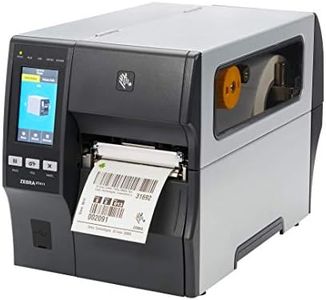
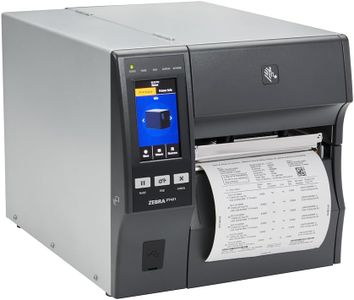
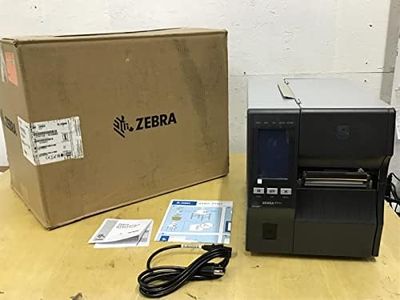
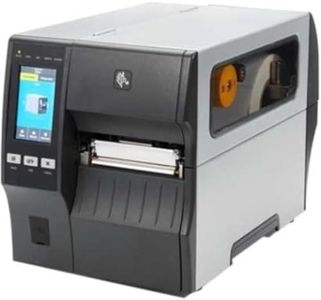
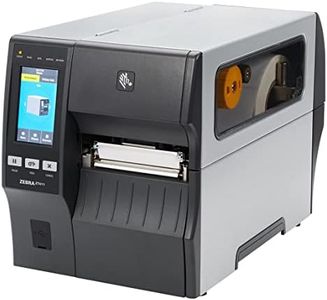
Zebra ZT411 Thermal Transfer Industrial Printer 300 dpi Print Width 4 in Serial USB Ethernet Bluetooth ZT41143-T010000Z (Renewed)
The Zebra ZT411 is a solid choice if you need a durable industrial thermal label printer. It offers a sharp print resolution of 300 dpi, which ensures your labels are clear and professional-looking. Its print speed of 14 inches per second is quite good, making it efficient for medium to large label printing tasks. The printer has a sturdy metal frame and a convenient clear media cover that helps monitor label supply easily, which is important in busy industrial settings.
Connectivity options include USB, serial, Ethernet, and Bluetooth, so it can fit into various network setups, although wireless options are limited to Bluetooth rather than Wi-Fi. It handles thermal transfer ribbons with standard-sized cores and media up to 8.5 inches wide, giving flexibility for different label sizes. The use of thermal transfer technology means you won’t have to buy costly ink or toner, just ribbons, which helps reduce running costs. It’s generally easy to use with remote control features and straightforward media loading.
The printer comes with a 90-day warranty, which some buyers might consider brief, and software compatibility details should be reviewed to ensure it meets specific printing software needs. This printer is best suited for industrial environments like manufacturing, healthcare, or retail where label durability and print quality are important, and where you have a controlled setup to support its connectivity. If you need a reliable, well-built thermal transfer printer with good speed and resolution, the ZT411 performs well, though it might not be ideal if full wireless networking or a longer warranty period is required.
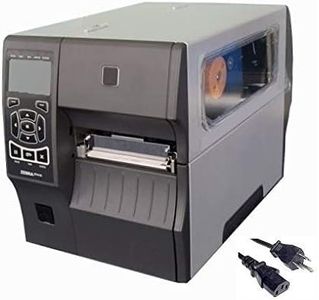
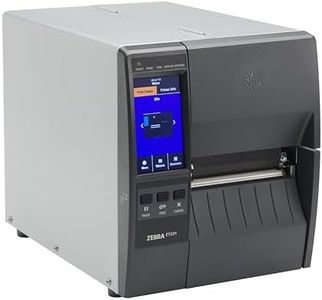
Zebra ZT410 Barcode Label Printer | Thermal Transfer & Direct | Industrial, 4-Inch, 203dpi, USB and Ethernet Interfaces, Power Cable (Renewed)
The Zebra ZT410 is an industrial-grade thermal label printer designed mainly for office and industrial environments needing reliable barcode and label printing. It offers a print resolution of 203 dpi, which is standard for clear, readable labels but may not suit applications requiring very fine detail. Built with sturdy materials, the ZT410 is known for solid durability, making it suitable for continuous use in busy workspaces.
Connectivity options include USB and Ethernet ports, allowing flexible setups whether you want a direct computer connection or a networked printer shared by multiple users. It handles media up to 4 inches wide with a 50-label capacity tray, which is practical for moderate print runs but might require frequent refilling in very high-volume settings. The printer is designed for straightforward operation with touchscreen controls and simple maintenance, although the renewed model comes with only a 90-day warranty, which may be a consideration for long-term reliability.
Software compatibility is generally strong with Zebra's solutions, supporting common label design programs. This printer is well-suited for businesses needing a dependable, mid-resolution label printer with flexible connectivity, especially if cost is a factor and moderate printing volume is expected.
Buying Guide for the Best Industrial Thermal Label Printers
Choosing the right industrial thermal label printer can significantly impact the efficiency and productivity of your business operations. These printers are designed to handle high-volume printing tasks and produce durable labels that can withstand various environmental conditions. To make an informed decision, it's essential to understand the key specifications and how they align with your specific needs. Here are the main factors to consider when selecting an industrial thermal label printer.FAQ
Most Popular Categories Right Now


